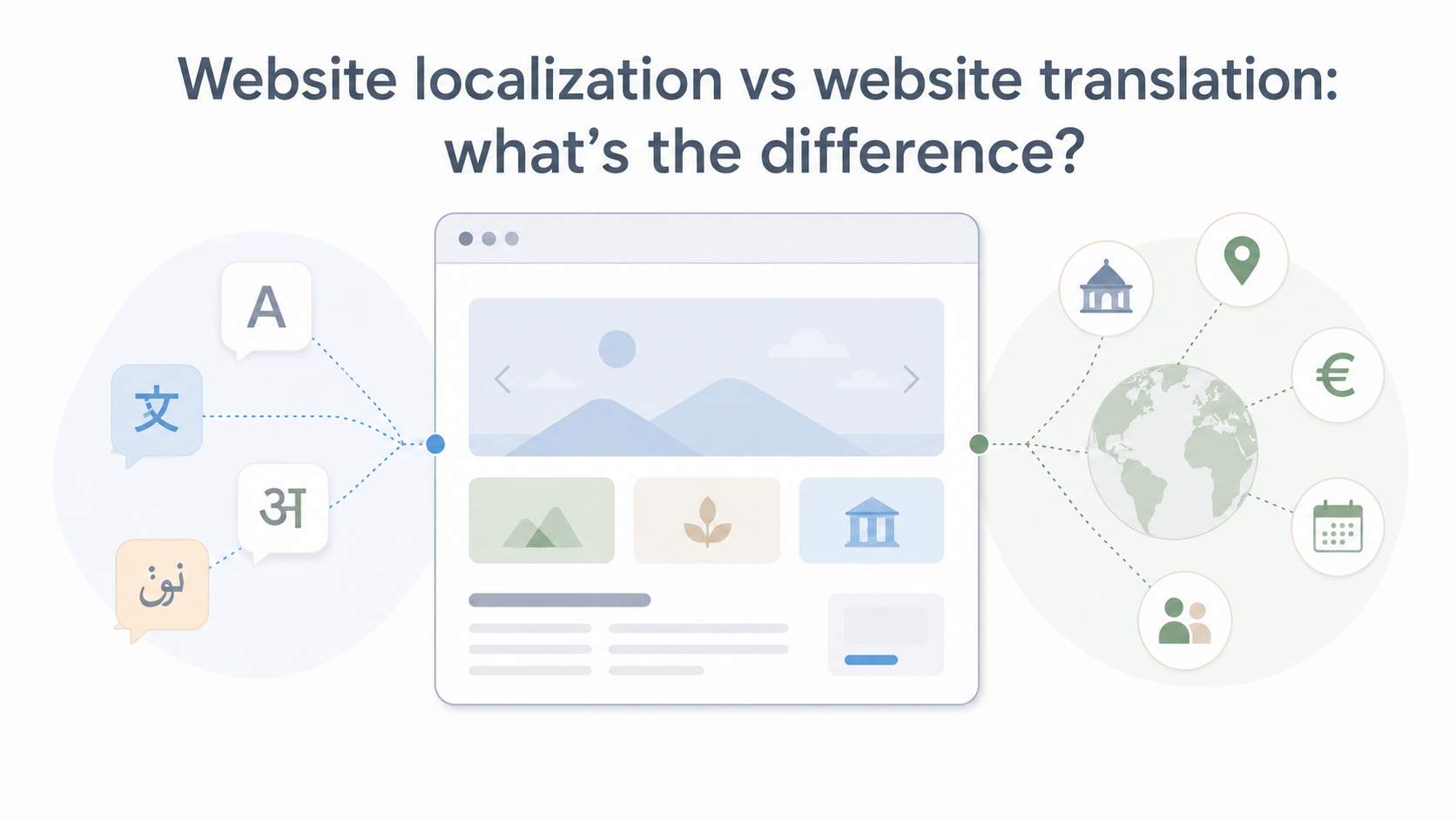

Why the difference matters for global websites
Many companies start global growth with one simple request: “We need our website in another language.” At first, this sounds like a website translation project. However, the real need is often bigger. The difference between website localization vs website translation matters because each service solves a different business problem. Translation helps visitors understand your content. Localization helps them feel that your website was built for their market.
For LSP clients, this distinction is important from the start. If you only translate words, your message may be clear but still feel distant. For example, pricing may use the wrong currency. Forms may ask for details that local users do not expect. Also, legal notices may not match local standards. As a result, users may hesitate before they contact you, request a quote or complete a purchase.
Therefore, choosing the right service helps you avoid extra revisions, weak user experience and missed sales opportunities.
What is website translation?
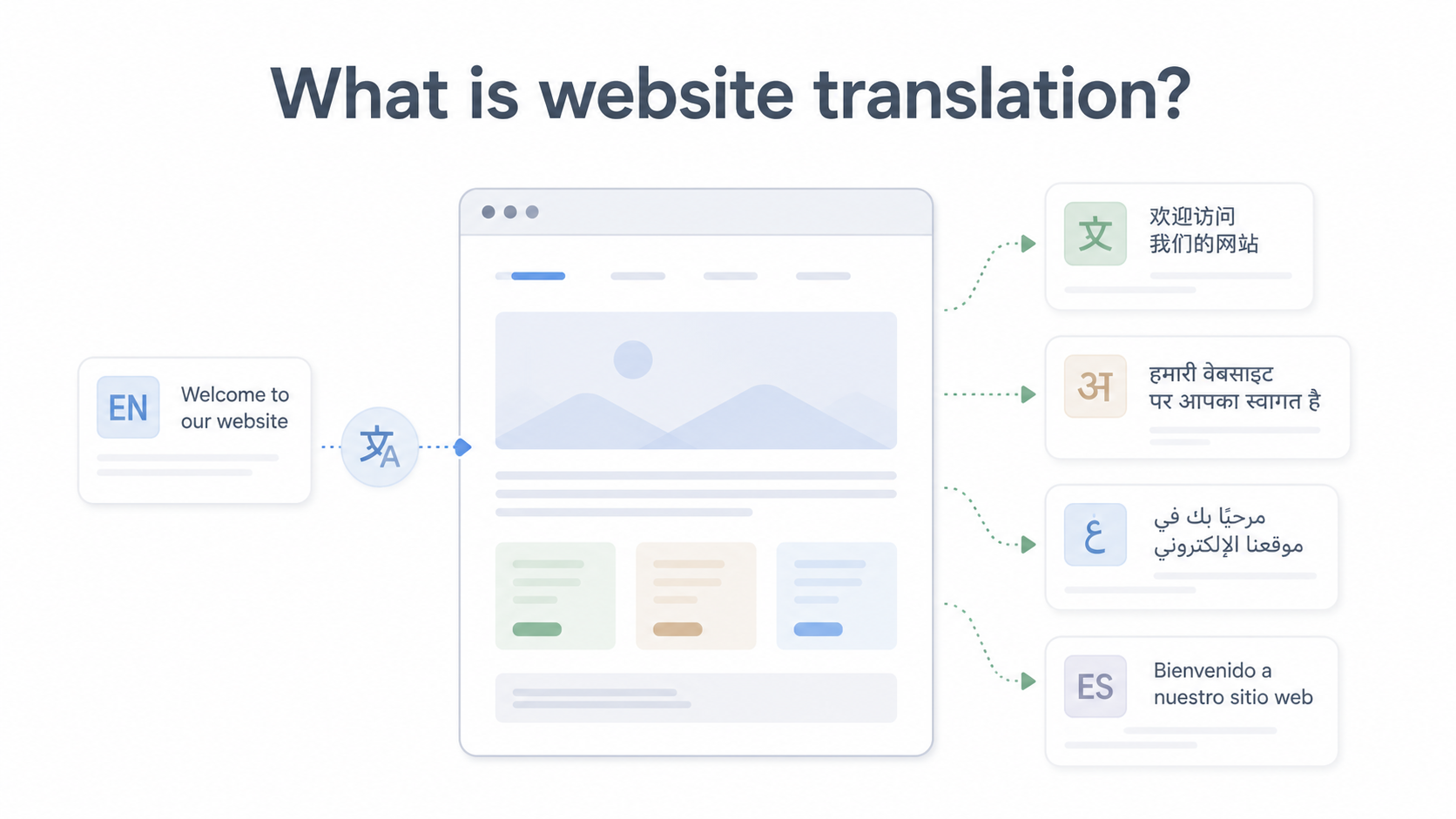
Website translation means transferring the meaning of website content from one language into another. In most cases, it focuses on text. For example, an LSP may translate your homepage copy, service pages, blog posts, calls to action, product descriptions or FAQs. The goal is simple: users should understand the same message in their own language.
However, good website translation is not just word-for-word replacement. A professional translator also considers tone, terminology and context. For instance, a B2B website needs clear industry language. Meanwhile, an e-commerce website may need shorter, more persuasive copy. Because of this, translation works best when the original website structure already fits the target audience.
Translation is often enough when your website is simple, informational and low-risk. For example, it may work for a basic company profile, a landing page or a blog article. Also, it can be a good first step when you want to test interest in a new market before investing more.
What is website localization?
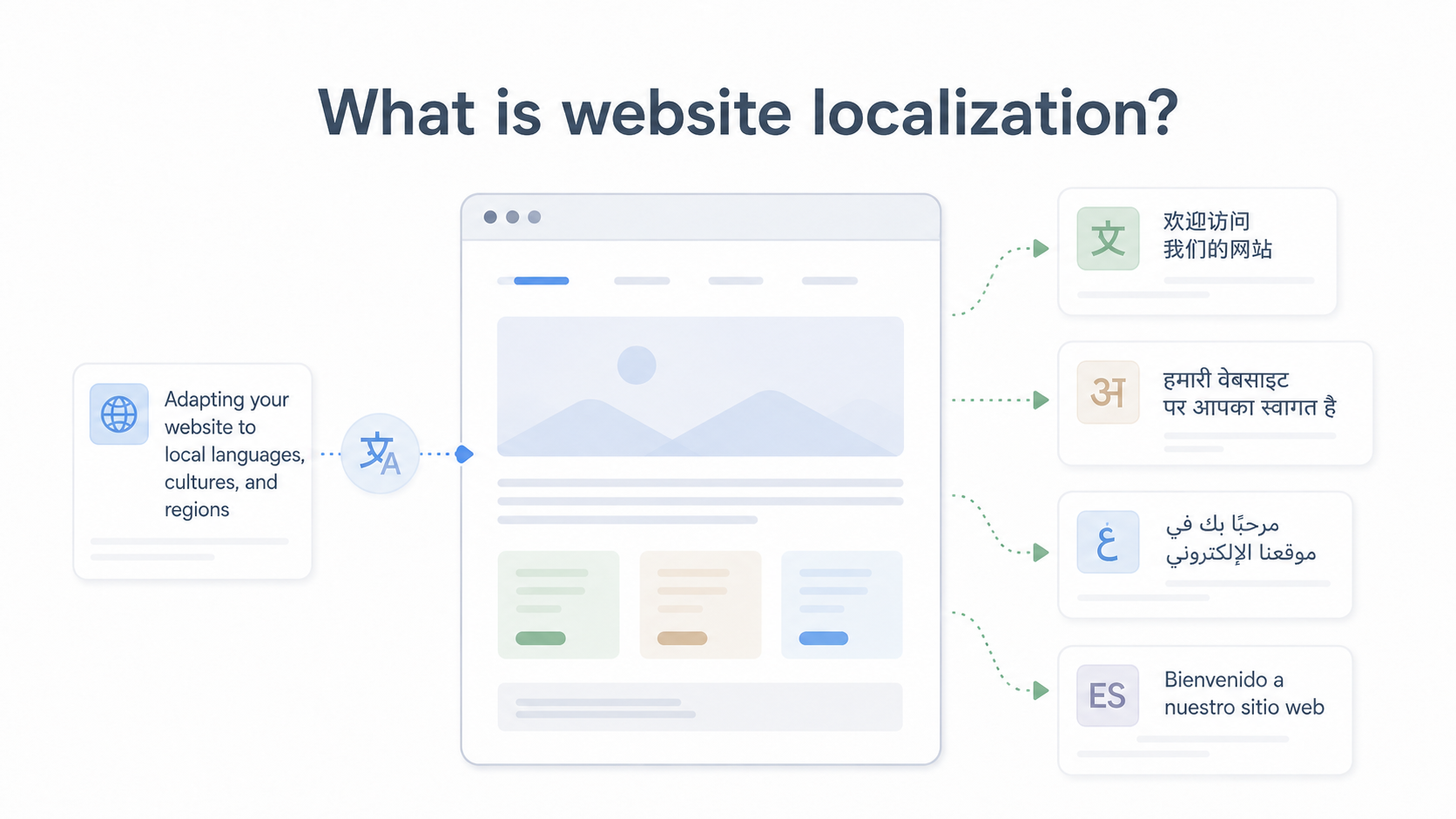
Website localization goes beyond translation. It adapts the full website experience for users in a specific country, region or culture. In other words, it makes the website feel natural, relevant and trustworthy for the target market. This includes language, but it also includes layout, visuals, currencies, units, forms, payment options, legal content and local expectations.
For example, a translated checkout page may still confuse users if it shows unfamiliar payment methods. Similarly, a contact form may perform poorly if it asks for a postcode in a market where users expect a different format. Also, a headline that works well in one country may sound too direct, too vague or too formal in another. Therefore, localization looks at how people actually use the website, not only at what the words mean.
For growing brands, localization is usually the stronger choice. It supports trust, conversion and long-term market entry. As a result, it helps your website do more than communicate. It helps users take action.
Website translation vs localization: practical examples
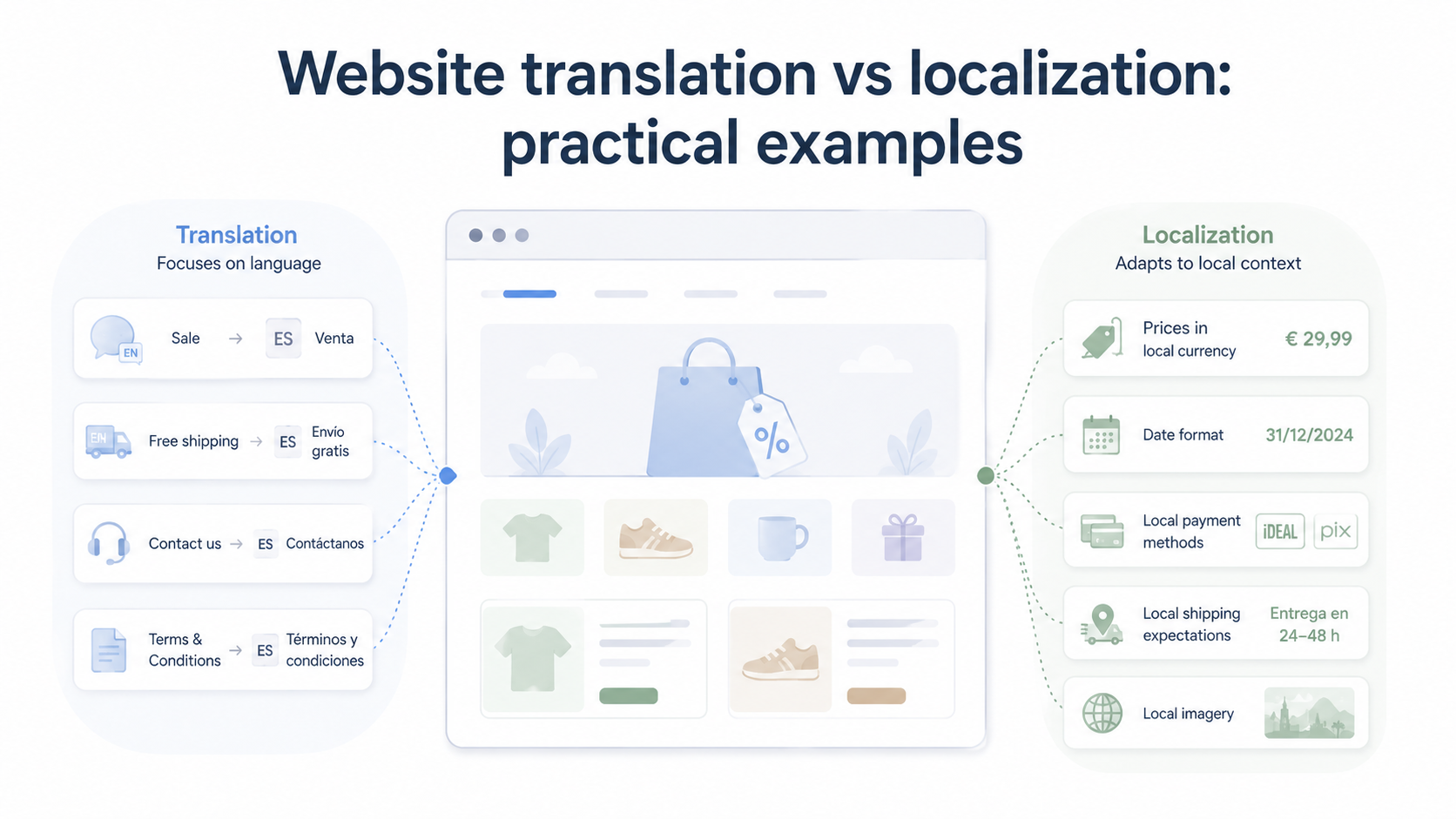
The difference becomes clearer when you look at real website elements. A homepage headline may only need translation if the message works across markets. However, it may need localization if the promise, tone or emotional appeal should change for local buyers. For example, one market may respond to direct sales copy, while another may prefer a softer, trust-based message.
A pricing page is another good example. Translation can explain the offer in another language. However, localization may adjust currency, tax details, billing periods and how prices appear. Similarly, a checkout flow may need more than translated buttons. Local users may expect different payment methods, address formats or delivery options.
Contact forms also show the gap between translation and localization. For instance, a translated form may still ask for fields that do not fit the local market. Legal notices can be even more sensitive. Therefore, LSP clients should review them carefully. In many cases, legal, privacy and consent content must meet local rules and user expectations.
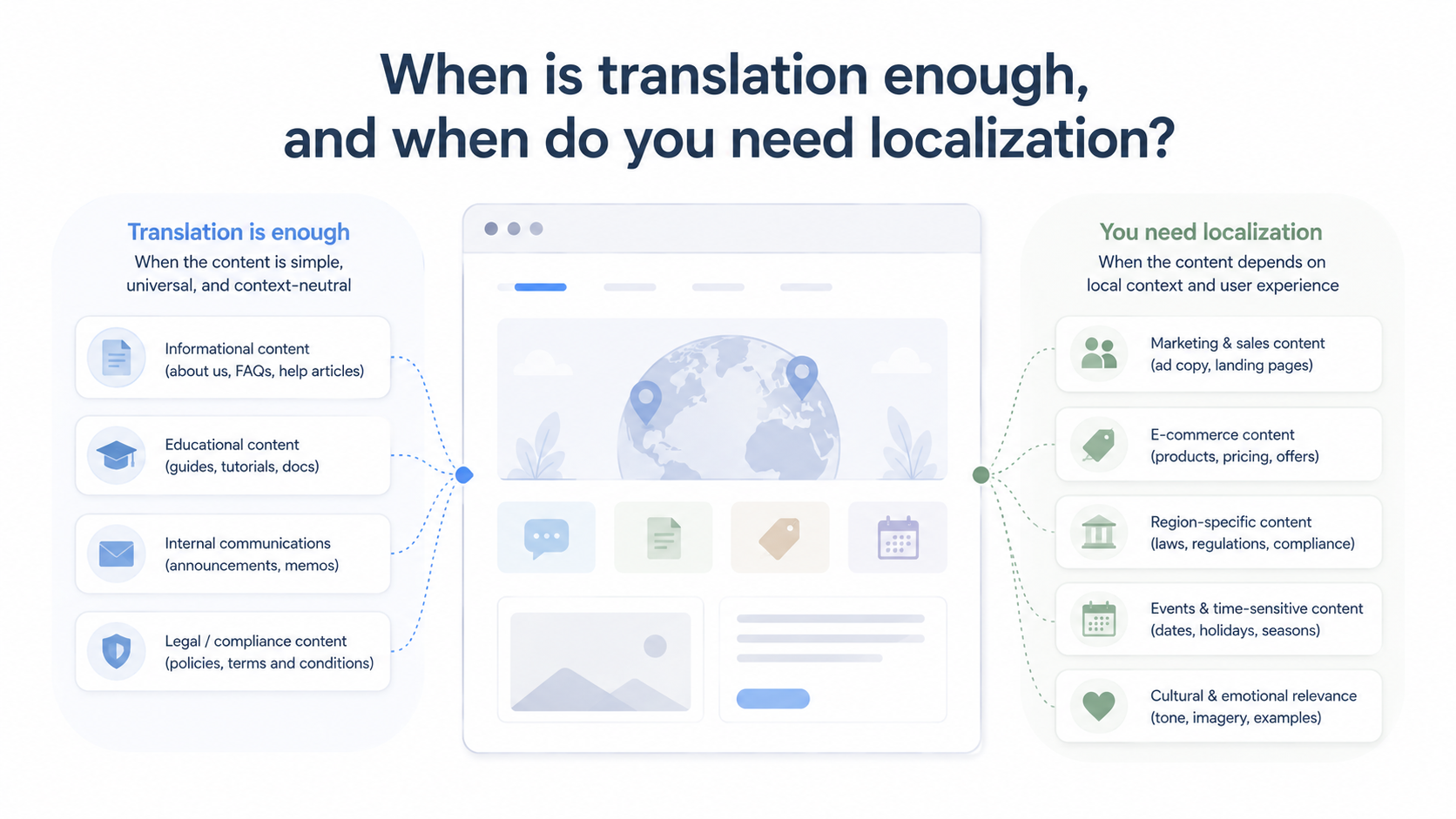
When is translation enough, and when do you need localization?
Translation may be enough when the website has a simple goal. For example, it can work well for blog posts, news updates, basic company pages or general service descriptions. It is also useful when you want to share information with international users, but you do not plan to sell, collect complex data or run local campaigns yet. In these cases, clear and accurate website translation can be a smart first step.
However, localization becomes necessary when the website supports business growth in a specific market. If users need to buy, register, request a quote or submit personal details, the experience must feel familiar. Otherwise, they may leave before they take action. Also, localization matters when your brand promise depends on trust, compliance or cultural fit.
For LSP clients, the decision should depend on risk and business goals. If the website only informs, translation may be enough. However, if the website needs to convert, support sales or build a local presence, localization is usually the better choice.
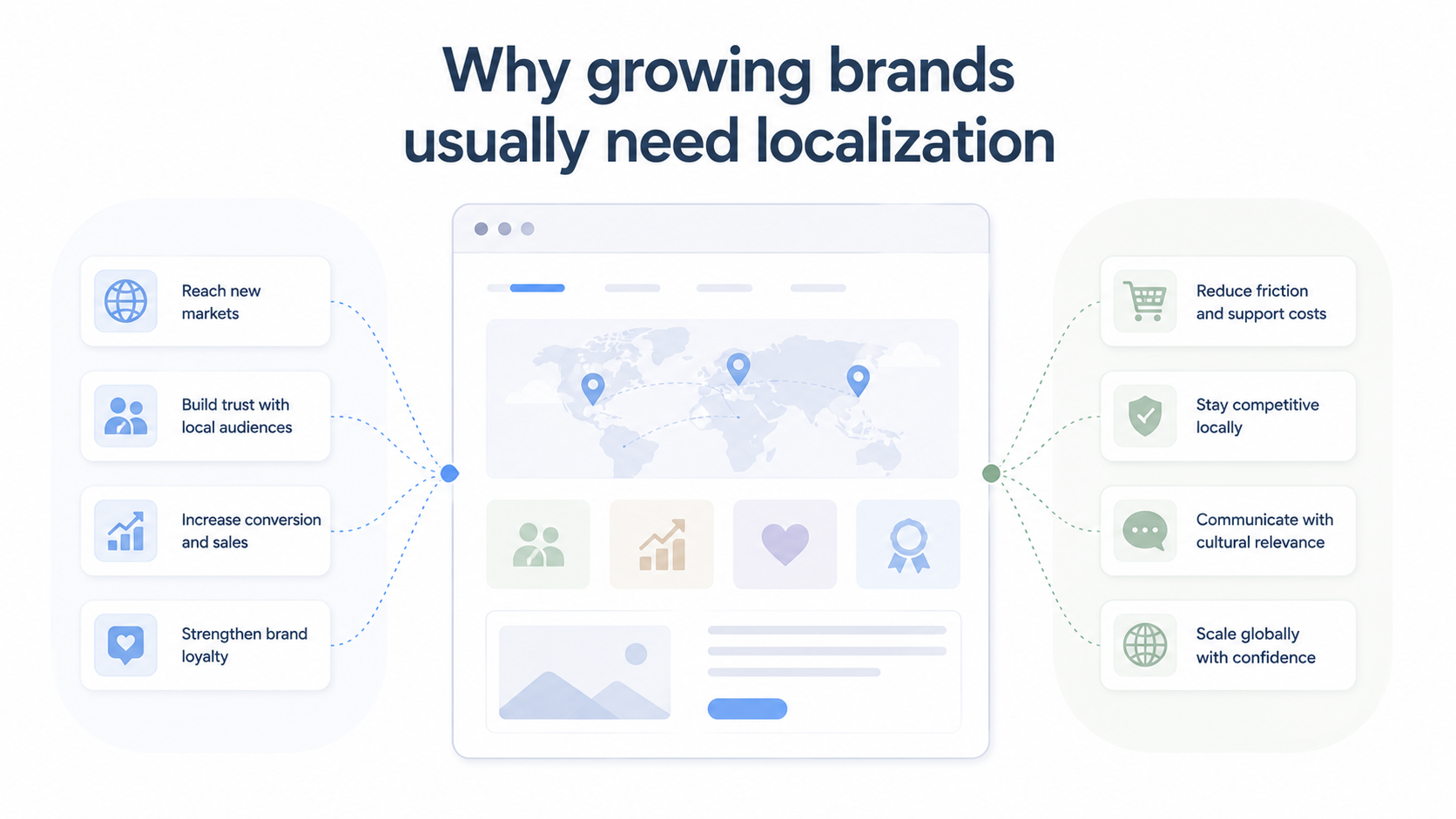
Why growing brands usually need localization
As brands grow, their website must do more than explain an offer. It must support sales, trust and customer action in each target market. Therefore, website localization often becomes more valuable than simple website translation. A translated website may help visitors read your content. However, a localized website helps them feel confident enough to click, contact, register or buy.
This is especially important for companies entering competitive markets. Local users compare your website with local providers. As a result, they expect familiar wording, clear pricing, local proof points and a smooth user journey. For example, testimonials may need local context. Calls to action may need a different tone. Also, service pages may need market-specific keywords so users can find them in search.
For LSP clients, this creates a strong business case for localization. It reduces friction and supports better conversion. In addition, it helps protect brand reputation. When a website feels natural, relevant and easy to use, users are more likely to trust the company behind it.
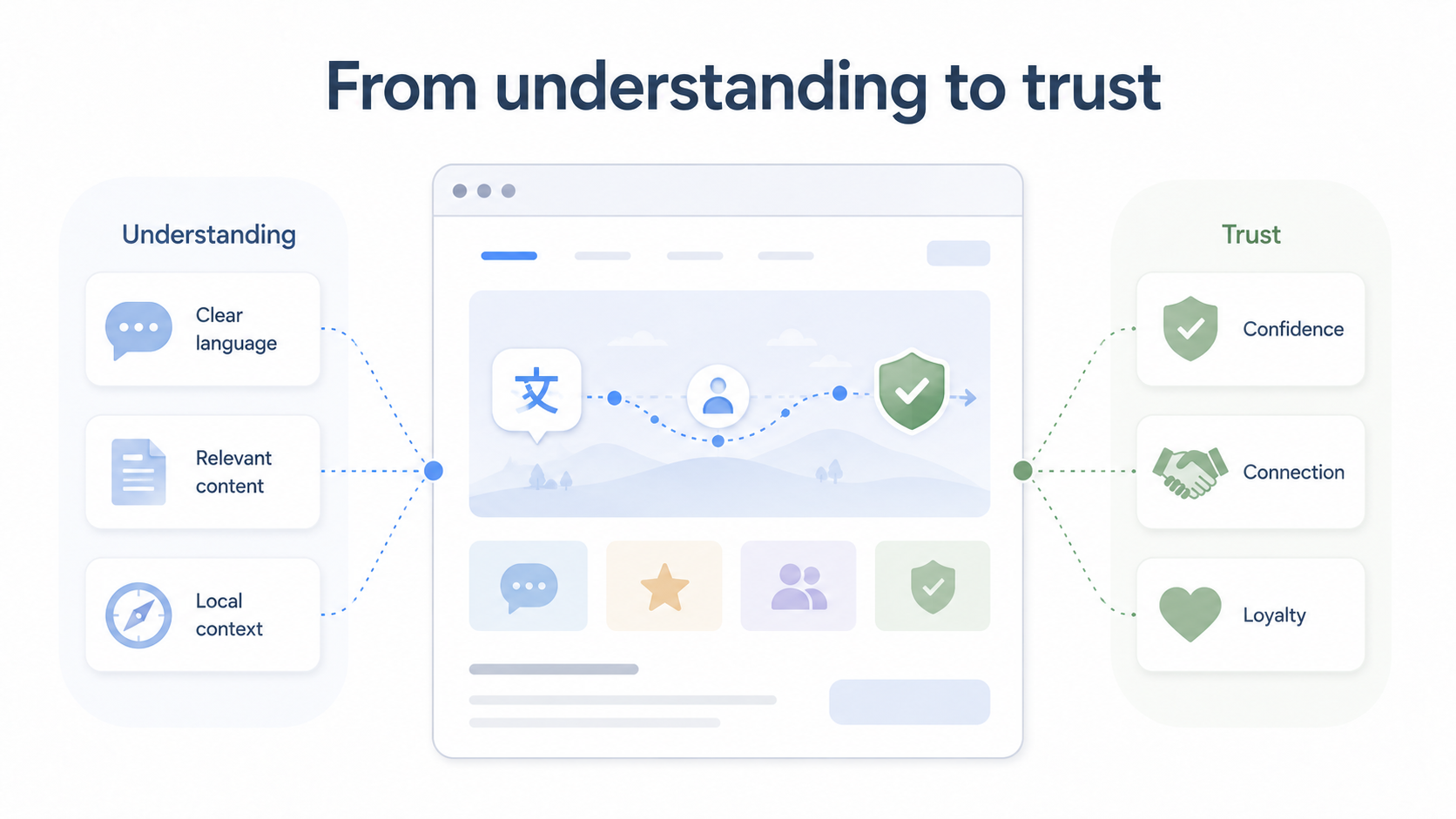
From understanding to trust
Website translation and website localization both help companies reach international users. However, they do not create the same result. Translation helps people understand your website in another language. Localization helps them trust it, use it and take action.
For some projects, translation is enough. For example, it may work well for simple content, early market testing or general information pages. However, when a website needs to generate leads, support sales or build a serious local presence, localization is usually the better choice.
That is why LSP clients should look beyond words. Before starting a multilingual website project, consider the goal of each page. Does it only need to inform users? Or does it need to convert them? Once this is clear, it becomes easier to choose the right service.
In the end, translation makes your website readable. Localization makes it feel right for the people you want to reach.