
Why Polish users expect more than a translation
Launching an app in Poland requires more than replacing English interface text with Polish words. App localization for Polish users should adapt the entire experience to the language, expectations, and behavior of the target audience. Therefore, localization can influence how quickly users understand the product and whether they continue using it.
A clear interface creates confidence from the first screen. However, awkward wording, unclear buttons, or inconsistent terminology can make even a well-designed app feel unreliable. Onboarding may become difficult to follow. Notifications may sound unnatural. In addition, poorly localized app store content can reduce visibility and discourage potential users from downloading the product.
For companies entering the Polish market, managing these elements internally can require significant time and specialist knowledge. Therefore, outsourcing app localization to an experienced language service provider can simplify the process. An LSP can coordinate translators, reviewers, project managers, and localization testers within one structured workflow. As a result, the language remains consistent across the app, support content, and store listing.
Most importantly, professional localization helps the app feel as though it was created for Polish users from the start.
What a complete app localization project includes
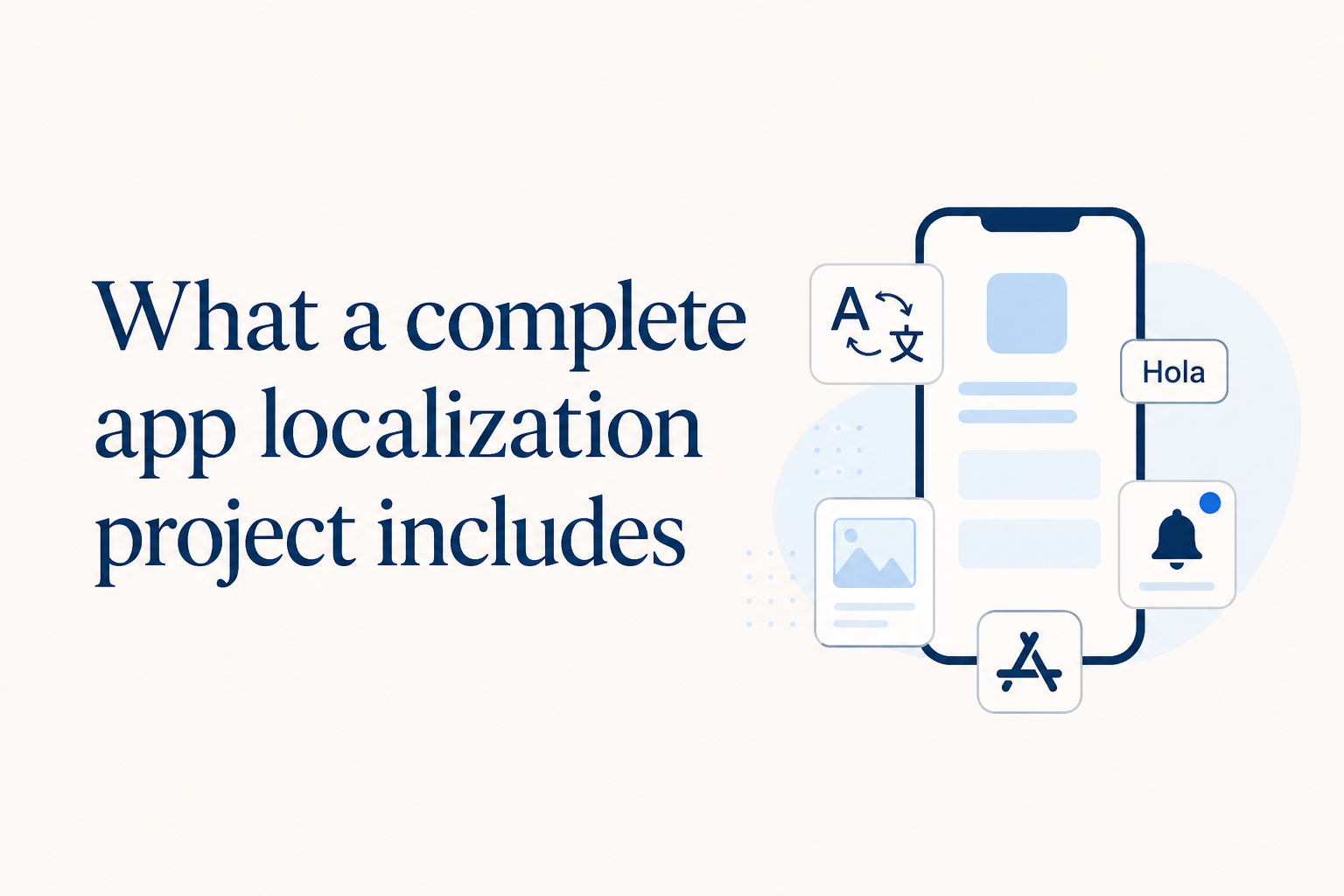
App localization covers every piece of content that users encounter before, during, and after using the product. First, the interface requires careful adaptation. This includes menus, buttons, labels, settings, forms, and navigation elements. Although these texts are short, they directly affect how easily users move through the app.
Onboarding content also plays an important role. It introduces features, explains key actions, and helps users reach value quickly. Therefore, unclear onboarding can increase confusion and early abandonment. Notifications, confirmation messages, and error alerts must also sound natural and provide useful guidance. In addition, help articles, FAQs, and support content should follow the same terminology as the interface.
App store listings form another key part of localization. The app name, description, keywords, screenshots, and promotional copy influence visibility and download decisions. Consequently, translating the listing word for word is rarely enough. Local keyword research and market-specific messaging may be necessary.
A professional LSP can manage all these content types together. As a result, users receive one coherent experience instead of disconnected translations created by different teams.
Why short interface text is harder than it looks
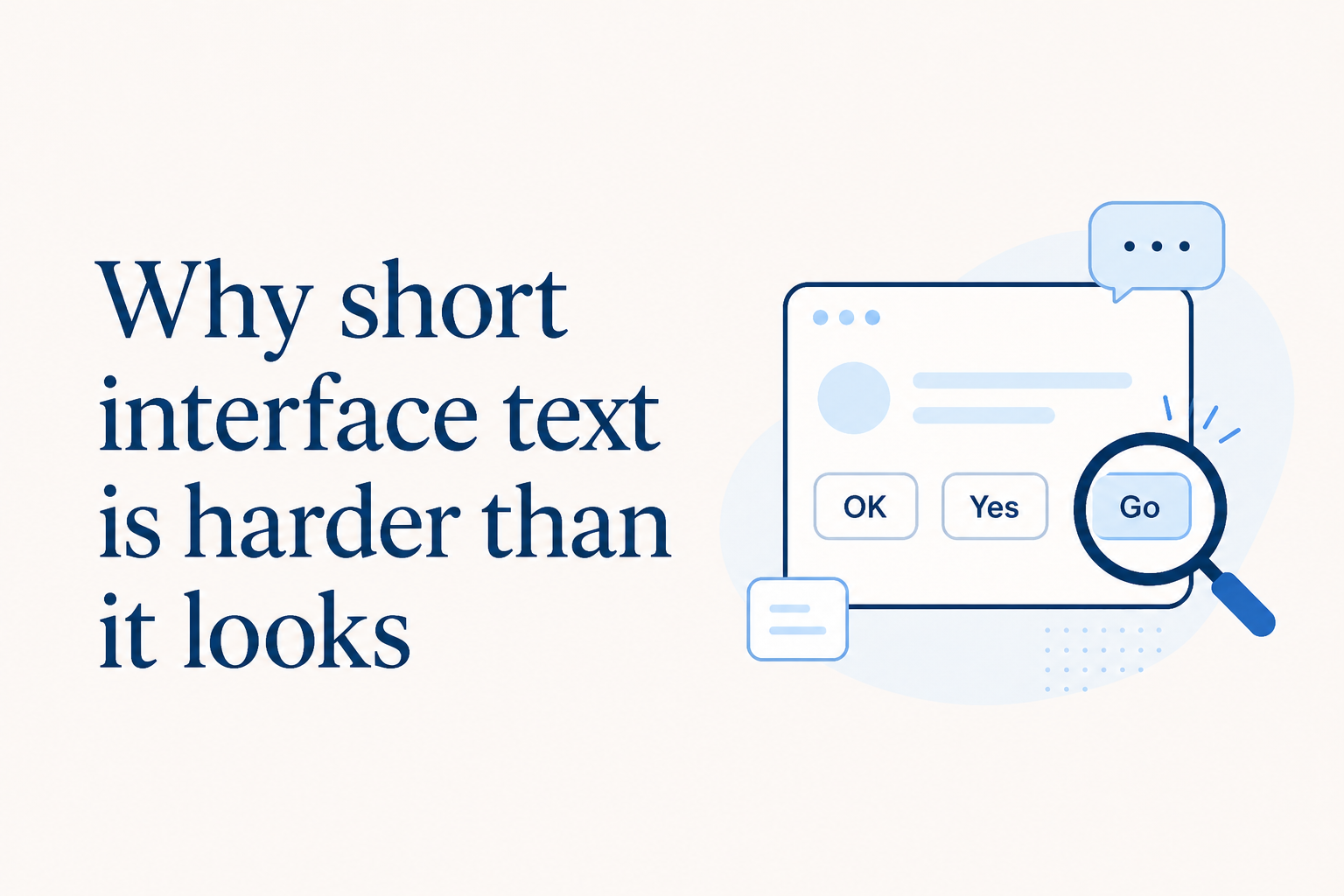
Short interface strings often appear simple, but they can be among the most difficult elements to translate. A single word may function as a button, menu command, status label, or instruction. Without context, the translator may not know what action the user should take. Therefore, even a linguistically correct translation can become misleading inside the app.
For example, the English word “continue” may refer to moving to the next screen, resuming a paused process, or confirming a choice. Each situation may require a different Polish version. Similarly, terms such as “save,” “close,” or “back” can change depending on the function and location. Screenshots, character limits, and developer notes help translators choose the right wording.
Polish grammar adds another layer of complexity. Verbs may need to reflect tone, formality, and the relationship between the app and the user. In addition, interface terminology must remain consistent across different screens. A button should not use one term while the help section uses another.
An experienced localization partner reviews strings in context and maintains approved terminology. Consequently, the final interface becomes clearer, more natural, and easier to use.
Why in-app testing matters before release
Even a strong translation can fail when it appears inside the app. Text may look correct in a spreadsheet but create problems on a real screen. Therefore, in-app testing should form part of every professional localization workflow.
During testing, linguists review the translated app in its final visual context. They can check whether buttons are clear, messages match user actions, and terminology stays consistent. In addition, they can identify text that has been cut off, hidden, or placed in the wrong field. Polish translations are often longer than English source strings. As a result, menus, headings, and buttons may require more space.
Testing should also cover the complete user journey. This includes account creation, onboarding, payments, settings, notifications, and error scenarios. However, linguistic accuracy is only one part of the review. Testers should also confirm that links work, variables appear correctly, and special Polish characters display without errors.
An experienced LSP can coordinate linguistic and visual testing with translators, reviewers, and development teams. Consequently, issues can be reported clearly and corrected before release. This reduces last-minute changes, protects the user experience, and helps companies launch with greater confidence.
A localized app should feel effortless
Successful app localization for Polish users combines accurate language, clear context, consistent terminology, flexible design, and thorough testing. Each element supports the others. Therefore, companies should treat localization as part of product development rather than as a final translation task.
A well-localized app guides users naturally from one action to the next. Buttons are easy to understand. Notifications sound relevant. Onboarding provides useful support without creating confusion. In addition, the app store listing reflects the product accurately and helps the right audience find it.
Working with a professional LSP can make this process easier to manage. One localization partner can coordinate content preparation, translation, terminology management, review, and testing. As a result, internal teams spend less time resolving language issues across separate suppliers or departments.
Most importantly, users should not notice the localization process. They should simply feel that the app understands their language and expectations. When the experience feels intuitive and trustworthy from the first screen, users are more likely to complete onboarding, explore key features, and continue using the product.