
Website localization mistakes can be easy to miss
Many common website localization mistakes remain invisible to internal teams. However, local users notice them almost immediately. A translated page may look correct at first glance. Yet the wording can still feel unnatural, unclear, or out of place.
This matters when your website supports sales, lead generation, or social media campaigns. For example, a strong social media post may bring users to your site. However, awkward language on the landing page can quickly reduce trust. As a result, potential clients may leave before contacting your team.
A professional website audit helps identify these weak points. It reviews not only grammar, but also tone, terminology, calls to action, and local search visibility. Moreover, it shows whether your content works as one consistent customer journey.
Good localization should feel natural. Therefore, users should not stop to think about the translation. They should focus on your offer, understand the next step, and feel confident enough to take action.
Mistake 1: translating calls to action too literally
Calls to action often contain only a few words. However, they have a major impact on conversions. Buttons such as “Learn more,” “Get started,” or “Request a quote” may seem easy to translate. Still, a direct translation does not always sound natural in Polish.
For example, the translated phrase may feel too formal, too vague, or too forceful. As a result, users may hesitate before clicking. The message can also conflict with the tone used in your social media content. Therefore, the transition from a post to the website may feel inconsistent.
A good CTA should reflect the user’s intention. It should also match the stage of the customer journey. For instance, a first-time visitor may respond better to an informative message than to a strong sales command.
During a website audit, an LSP can review every CTA in context. Moreover, the team can suggest clearer alternatives based on the page purpose, target audience, and desired action.
Mistake 2: ignoring Polish tone and levels of formality
Polish gives brands several ways to address their audience. However, choosing the wrong level of formality can make the message feel distant or overly familiar. A website may use formal language on one page and informal language on another. As a result, the brand voice becomes inconsistent.
This issue often appears when different translators, marketing teams, or agencies work on separate channels. For example, social media posts may sound friendly and direct. Meanwhile, the website may use rigid, corporate wording. Therefore, users may feel that they are interacting with two different brands.
The right tone depends on the industry, audience, and communication goal. A B2B company may need a professional voice. However, professional does not have to mean cold or complicated.
An LSP can create clear tone-of-voice guidelines for both website and social media content. Moreover, regular audits help teams maintain the same level of formality across pages, posts, campaigns, and customer touchpoints.
Mistake 3: forgetting SEO localization
A translated website does not automatically perform well in local search. However, many companies still reuse English keywords in Polish content. This can limit visibility, even when the translation itself is accurate.
Polish users may search for the same service with different terms. Therefore, keyword research should happen before the final copy goes live. Page titles, headings, meta descriptions, and image text also need local review. Otherwise, the website may miss valuable traffic.
This issue matters even more when social media campaigns send users to specific landing pages. For example, the ad may use language that matches local search habits. Yet the website may use different terms. As a result, the customer journey feels less consistent.
An LSP can combine language expertise with SEO-focused website audits. Moreover, the team can identify unnatural keywords, missing metadata, and weak internal links. Good SEO localization helps users find the right page and understand the offer quickly.
Mistake 4: not testing the website after upload
Localization does not end when the translated files are delivered. However, website content can change during upload. Text may appear in the wrong place, buttons may break, or sentences may no longer fit the layout.
Polish text can also be longer than the original version. Therefore, headings, menus, and mobile screens need careful testing. A clear message may become difficult to read when the design cuts off part of the sentence. As a result, users may struggle to navigate the page.
Links, forms, and language selectors also require review. For example, a contact form may still display English error messages. Meanwhile, a social media campaign may direct users to the wrong language version. These issues can reduce trust and waste advertising spend.
A professional LSP can complete linguistic and functional testing after upload. Moreover, a website audit can reveal broken links, formatting problems, and inconsistent language. Testing protects the user experience before small errors become visible to potential clients.
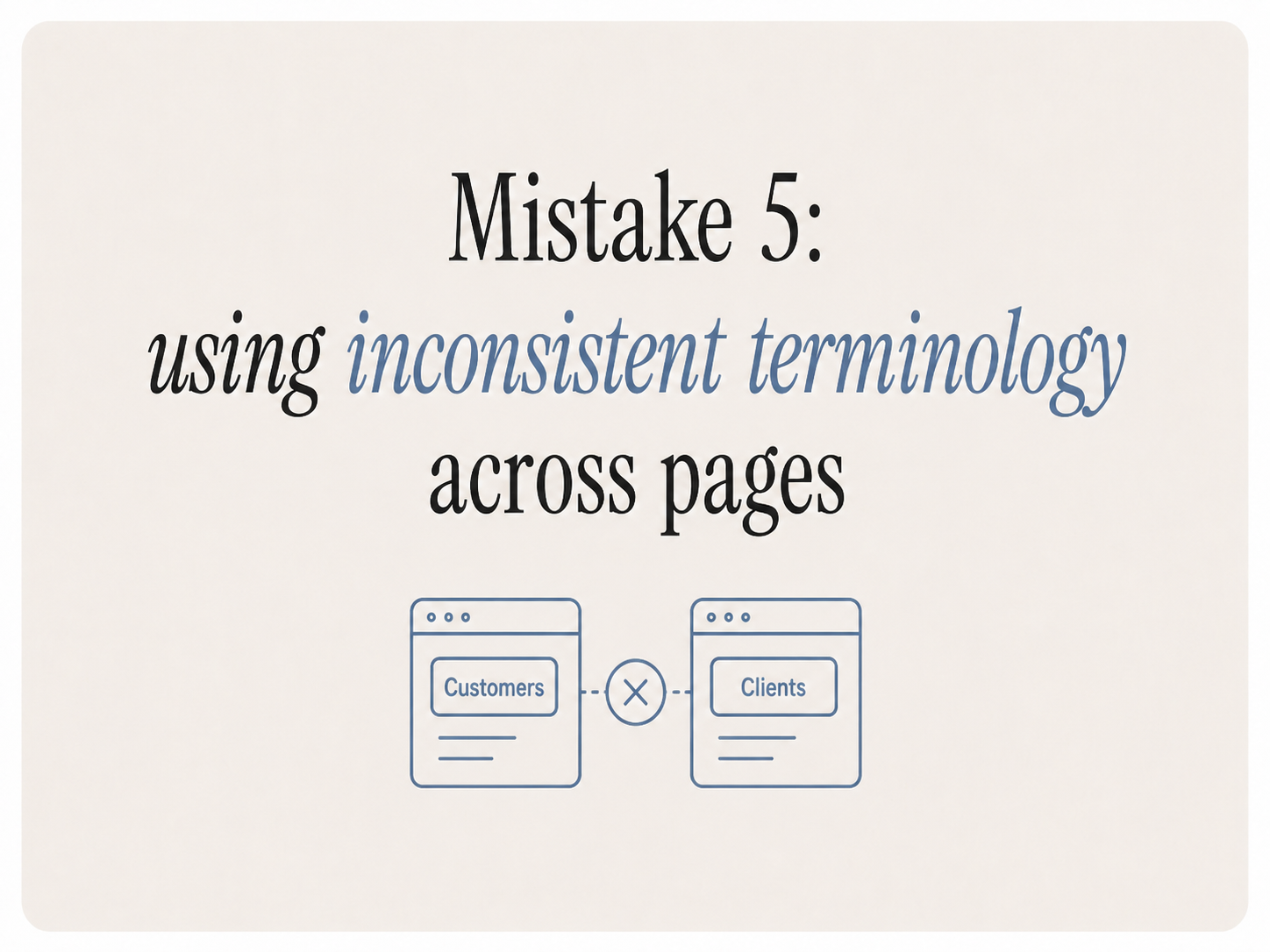
Mistake 5: using inconsistent terminology across pages
Inconsistent terminology can make a website feel unreliable. However, this problem often appears when several people work on the same content. One page may use one term, while another page uses a different version. As a result, users may wonder whether the terms describe the same service.
This issue becomes more serious on technical, legal, or B2B websites. For example, a company may translate the same service name in several ways. Meanwhile, social media posts may introduce another variation. Therefore, the brand message becomes harder to follow.
Consistent terminology also supports SEO. When the same key terms appear across related pages, search engines can understand the website more clearly. Moreover, users can move between pages without confusion.
An LSP can create a terminology database or glossary before the project begins. In addition, regular website audits help identify differences across pages, campaigns, and social channels. Clear terminology strengthens the brand and makes every customer touchpoint feel connected.
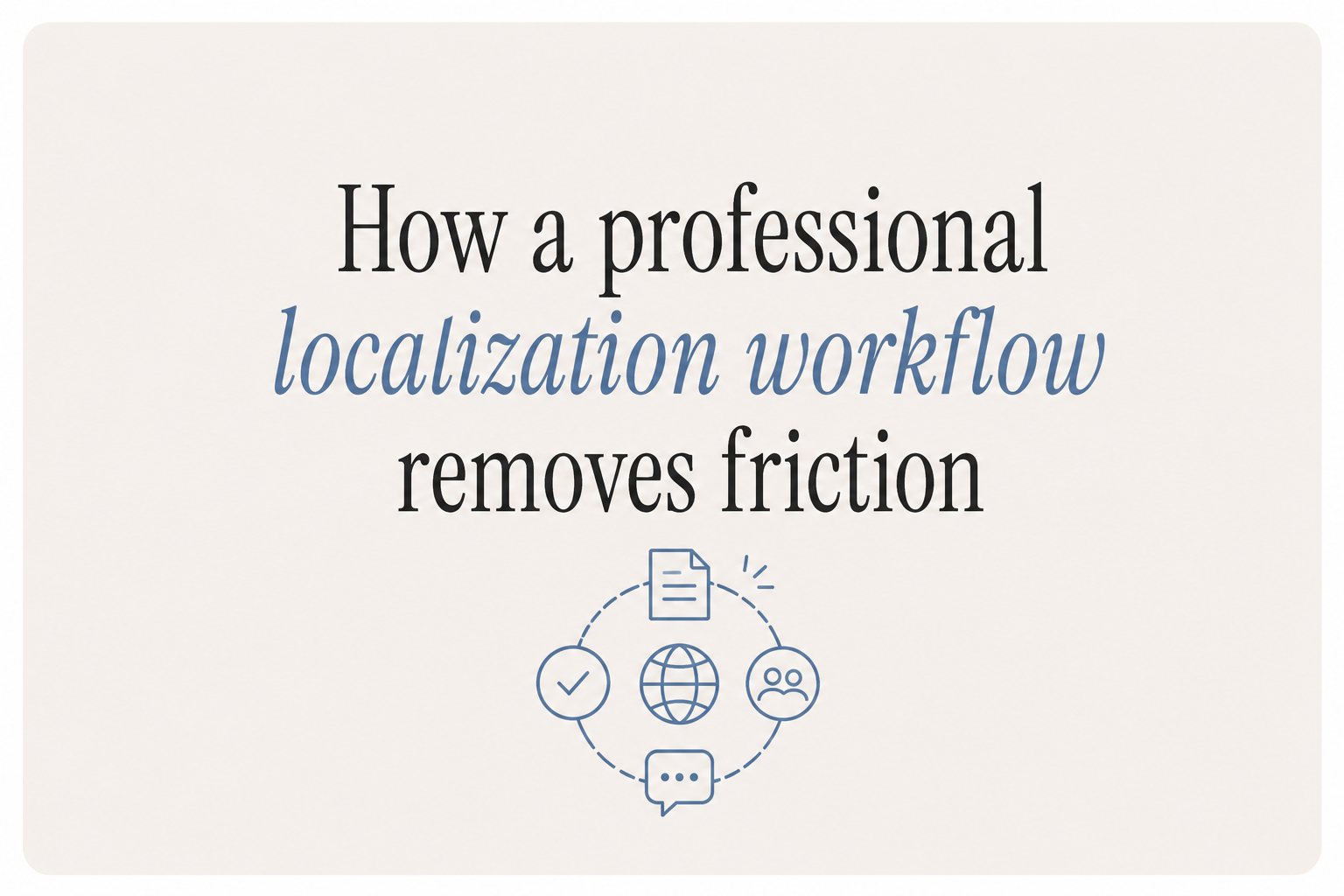
How a professional localization workflow removes friction
A professional localization workflow keeps every stage consistent. First, the LSP reviews the website, audience, and business goals. Next, the team defines the right tone, approved terminology, and SEO keywords.
After translation, editors check the content for clarity, accuracy, and consistency. They also review headings, CTAs, metadata, and page structure. Once the website goes live, linguistic and functional testing helps identify broken links, layout issues, or missing translations.
This process can also support outsourced social media management. As a result, website pages, posts, and campaigns use the same tone and terminology. The customer journey feels consistent from the first social media interaction to the contact form.
Good localization removes friction. Users understand the offer, trust the brand, and know what to do next. In contrast, weak localization creates doubt through unclear CTAs, inconsistent wording, or poorly optimized pages.
A professional website audit can reveal these issues before they affect traffic, leads, or conversions. Therefore, working with an experienced LSP helps ensure that language, SEO, and user experience support business growth.