
The challenge: making a global website work for Polish customers
Entering a new market often starts with a website. However, website localization for the Polish market involves much more than translating existing pages into Polish. The website needs to feel clear, relevant and trustworthy to local customers from the first visit.
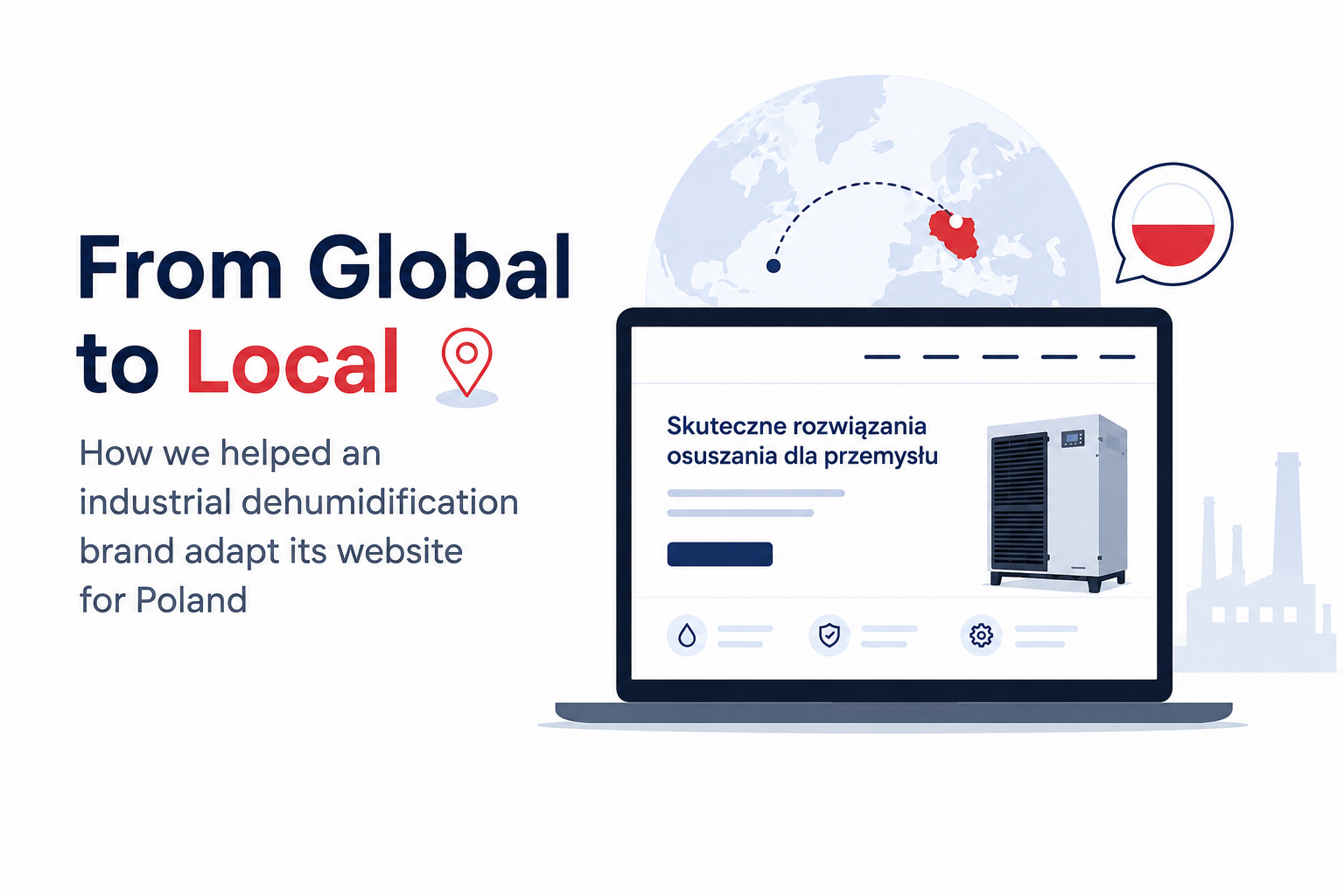
Our client, an international provider of industrial dehumidification solutions, wanted to strengthen its presence in Poland. Therefore, the Polish website had to communicate complex technical information in a way that felt natural to local buyers. Product descriptions, landing pages, interface elements and specialist terminology all needed to follow the same language and tone.
At the same time, consistency was essential. Industrial customers often compare specifications, applications and solutions across several pages before making contact. As a result, unclear terminology or inconsistent wording can make the customer journey more difficult and reduce confidence in the brand.
There was also a practical challenge. Website content can be spread across product pages, menus, forms and other areas of a CMS. Consequently, preparing everything for localization can take significant time for an internal team.
The client needed more than a translation supplier. They needed a partner that could help organize the process, understand the technical content and make sure the Polish website worked as one consistent digital experience.
The process: from website assessment to in-context review
A smooth localization project starts with a clear understanding of the website. Therefore, we first reviewed the existing structure, content and localization needs. This helped us identify what needed to be translated, where specialist terminology appeared and which parts of the site required extra attention.
Next, we prepared the content for localization. The client can provide the files directly, but this is not always the easiest option. For that reason, when back-office access is available, Aploq can extract the content and organize it for the localization team. This reduces the amount of manual work on the client’s side and keeps the process more efficient.
Two experienced linguists then worked on the Polish version. They localized website copy, UI elements, landing pages, product descriptions and industry-specific terminology. At the same time, they focused on consistency across the whole website, not just individual pages.
However, our work does not end when the translated content is delivered. Once the Polish version is implemented, we can review it in context and flag issues such as missing text, inconsistent terminology or wording that does not fit the page. As a result, the client receives not only translated content, but a website that works more naturally for Polish users.
The result: a local website ready to support growth
The result was a Polish website that better matched the expectations of local customers. Instead of offering a simple translated version of the original site, the client gained a more consistent and accessible digital presence for the Polish market.
Just as importantly, the project did not end after the initial localization. The client continues to work with Aploq on website updates, new content and additional product descriptions. As the company develops its offer, the Polish version can grow with it.
This ongoing approach also helps prevent one of the most common problems with multilingual websites. Over time, the source-language version changes, while local versions are often left behind. Therefore, regular updates are essential if a company wants to maintain a consistent customer experience across markets.
For the client, working with one localization partner also makes future updates easier to manage. Terminology, tone and previous decisions remain consistent, while new content can be added without rebuilding the process each time.
Ultimately, successful website localization is not a one-time task. It is part of maintaining a strong local presence. By combining localization, content support and in-context quality checks, Aploq helps international brands keep their websites relevant as their business continues to grow.