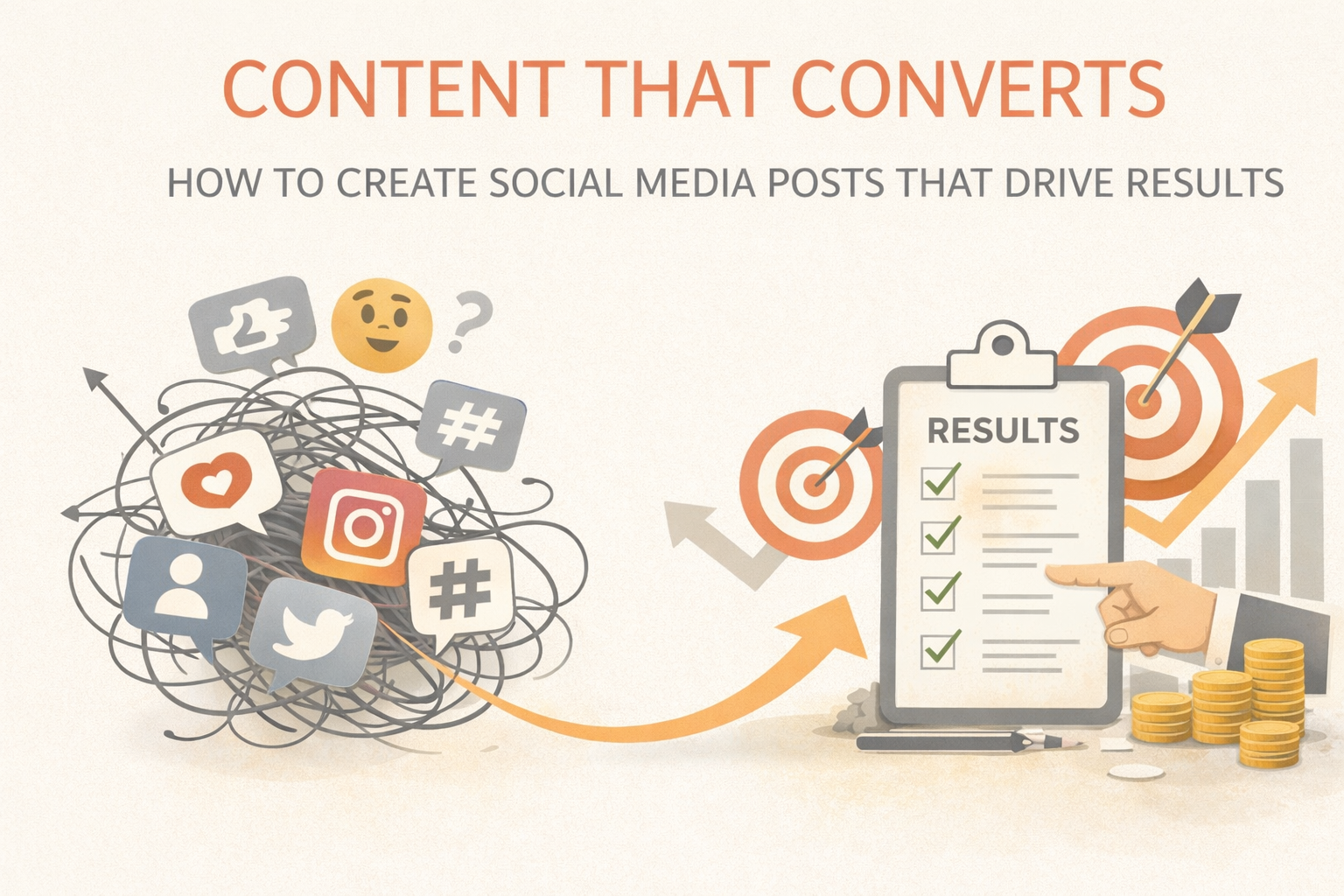
Why some social media posts drive results

Many companies publish on social media regularly. However, consistent posting does not always lead to results. Likes may appear, yet meaningful engagement or leads often remain low. Therefore, businesses increasingly ask a key question: how do you create social media posts that convert?

Today, potential clients use social platforms to research brands before making decisions. As a result, every post contributes to first impressions. In addition, audiences expect useful insights, not just promotional updates. Content must therefore provide value while guiding readers toward action.

Effective posts combine several elements. First, they align with the intent of each platform. Second, they follow a clear structure that captures attention and delivers value. Finally, strong visuals and persuasive captions encourage interaction. Consequently, social media becomes more than a visibility tool. It becomes a channel that supports business growth.

This article explains how brands can create social media content that drives real results. The following sections explore platform behavior, post structure, and the elements that turn attention into engagement.
Understand platform intent before creating content

Understand platform intent before creating content

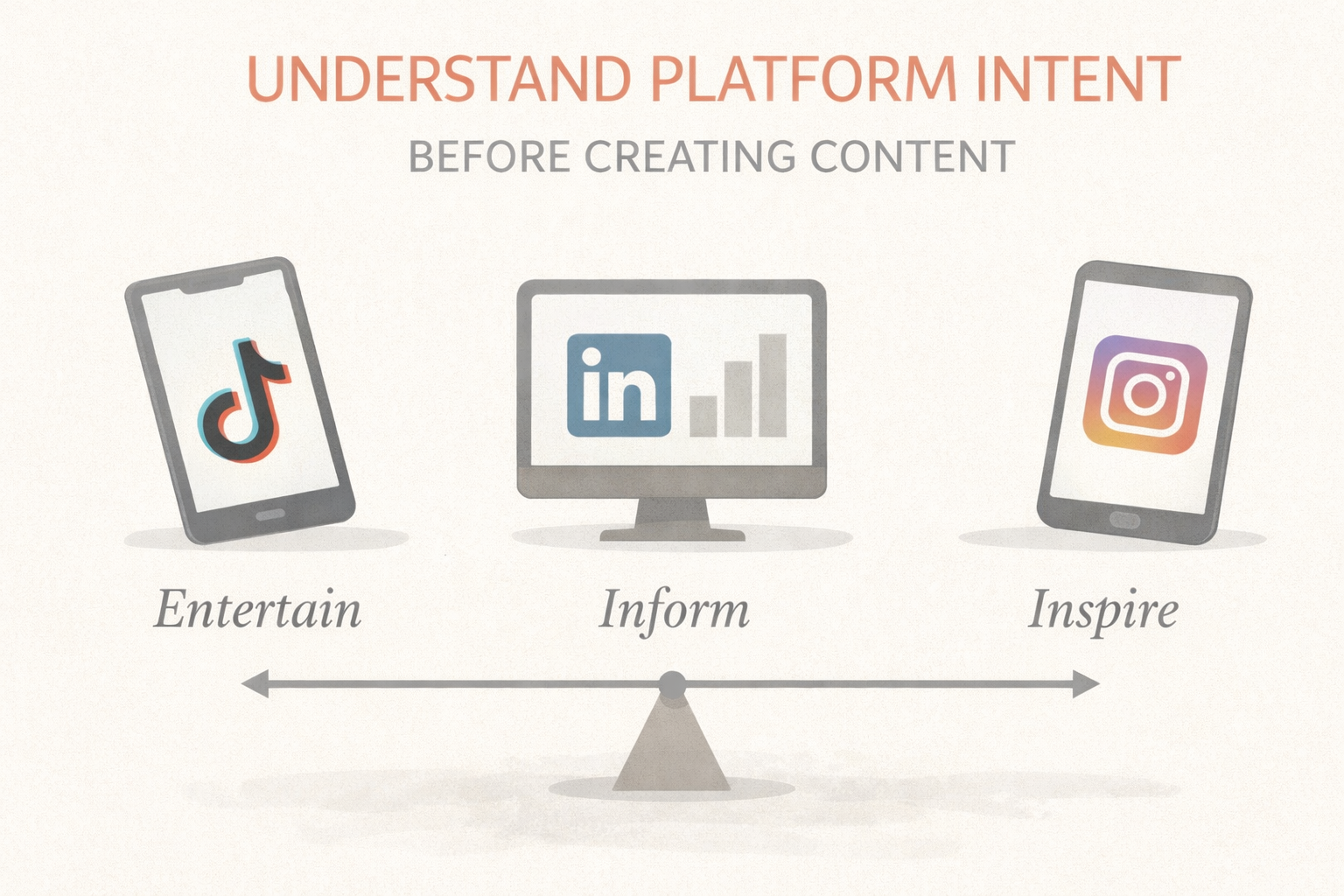
Each social media platform attracts users with different expectations. Therefore, the same message rarely performs equally well everywhere. Understanding platform intent is the first step toward creating effective content.

For example, TikTok users typically look for quick inspiration or entertainment. Short videos and creative storytelling perform best there. In contrast, LinkedIn audiences expect professional insights and practical expertise. As a result, educational posts and industry commentary often gain stronger engagement.

Instagram occupies a slightly different space. Visual storytelling plays a central role, while captions provide context and personality. Consequently, brands must balance strong visuals with concise messaging.

However, many companies still publish identical content across platforms. This approach usually reduces performance. Audiences respond better when content feels native to their environment. Therefore, adapting format, tone, and pacing is essential.

Once platform intent is clear, content becomes more relevant and easier to consume. In addition, audiences are more likely to engage with posts that match their expectations.
The anatomy of high-performing social media posts

The anatomy of high-performing social media posts

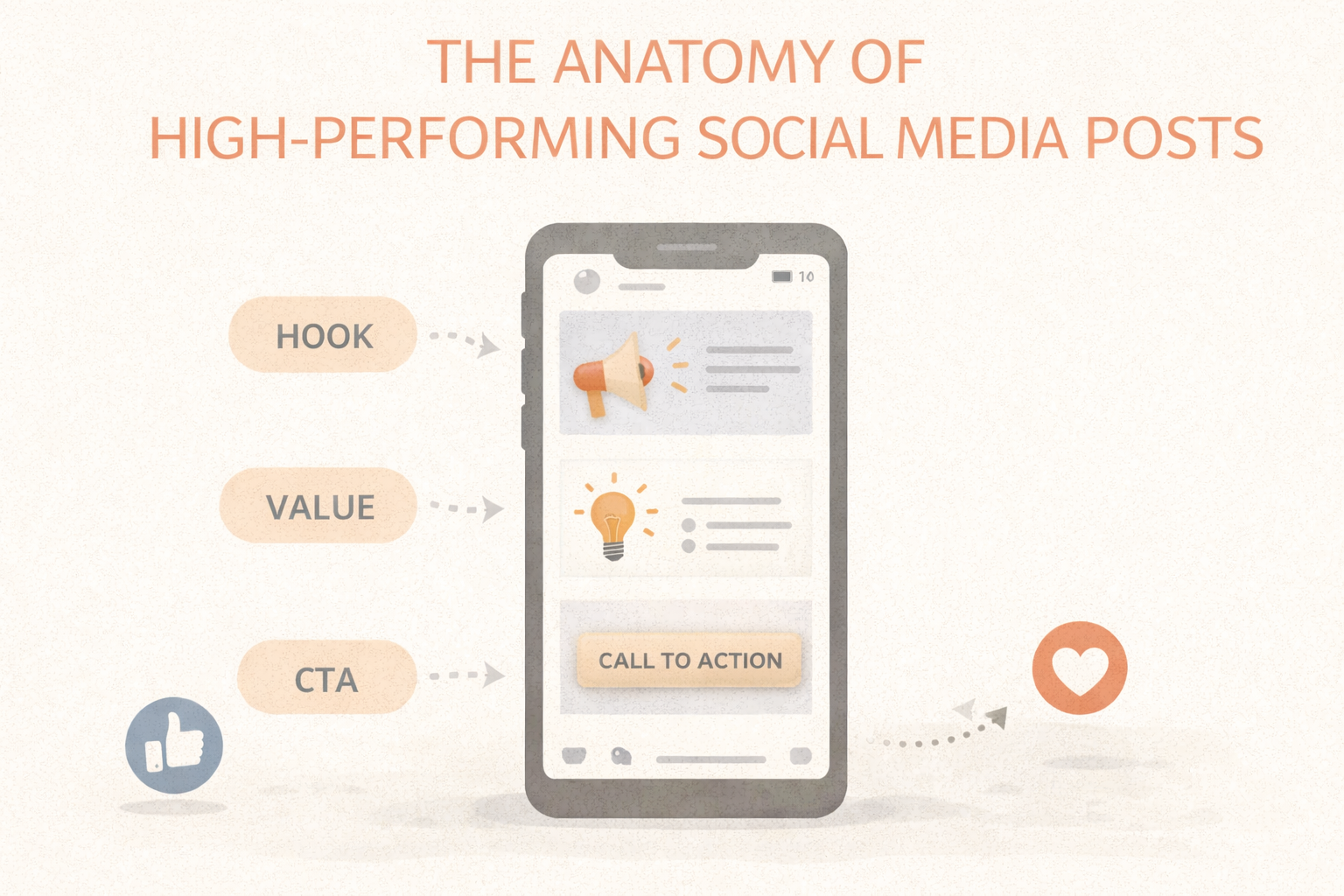
High-performing content rarely happens by accident. Instead, successful social media posts that convert follow a clear structure. One effective approach is the Hook–Value–CTA framework.

The hook captures attention immediately. Because users scroll quickly, the first line or visual must spark curiosity. A strong question, surprising statistic, or bold statement often works well. As a result, audiences pause long enough to engage with the content.

Next comes the value. This section delivers insight, advice, or useful information. Educational tips, short case examples, or industry observations can all provide value. Consequently, the audience gains something meaningful from the post.

Finally, a clear call to action guides the next step. For instance, readers might comment, download a resource, or visit a website. Without this element, even strong content may not generate measurable outcomes.

When brands follow this structure consistently, posts become easier to understand and more likely to drive engagement.

Use visual storytelling to strengthen engagement

Use visual storytelling to strengthen engagement

Visual storytelling plays a major role in social media performance. People process images faster than text. Therefore, strong visuals help capture attention in crowded feeds. At the same time, they make messages easier to understand.

Effective visuals should support the main idea of the post. For example, infographics can explain complex topics quickly. Carousels allow brands to guide audiences through short step-by-step stories. Meanwhile, short videos often increase reach because platforms prioritize dynamic formats.

Consistency also matters. A recognizable visual style helps audiences identify your brand immediately. Colors, typography, and layout should therefore remain aligned with your overall identity. As a result, each post reinforces brand recognition.

However, visuals should remain simple and purposeful. Overloaded graphics often confuse viewers instead of helping them. Clear structure and focused messaging improve comprehension. Consequently, audiences are more likely to stay engaged and continue reading the caption.

When visuals and messaging work together, posts become more memorable. In addition, they encourage audiences to interact with the content.

Writing captions that convert

Writing captions that convert

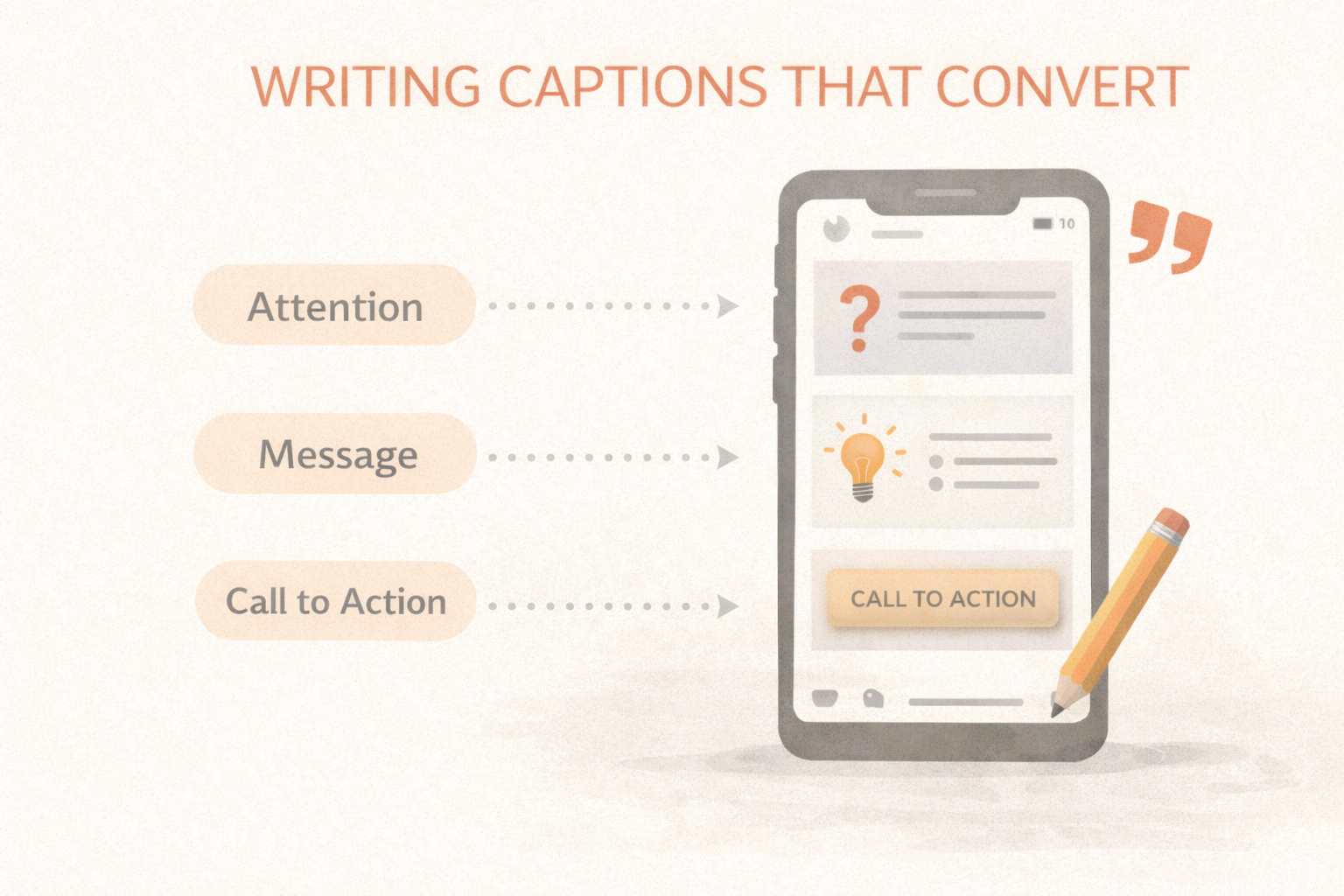
Captions turn attention into action. Even strong visuals need clear context and direction. Therefore, captions should guide readers through the message while encouraging interaction.

The opening line matters most. Because users scan quickly, the first sentence must capture interest. A question, insight, or bold statement can help stop the scroll. As a result, readers continue exploring the content.

Next comes the core message. Captions should deliver value through short insights, tips, or examples. However, clarity remains essential. Simple language improves readability and keeps audiences engaged.

Tone also plays an important role. Professional platforms may require a more informative style. In contrast, visual platforms often allow a lighter and more conversational tone. Therefore, captions should reflect both brand voice and platform expectations.

Finally, every caption needs a clear call to action. Encouraging comments, shares, or link clicks increases engagement. Consequently, captions transform passive viewing into active interaction.

Test, learn, and optimize your content

Test, learn, and optimize your content

Creating social media posts that convert requires both creativity and structure. Successful brands combine platform awareness, clear messaging, and strong visuals. As a result, their content attracts attention and encourages meaningful interaction.

However, improvement comes through testing. Different hooks, visuals, and caption styles can produce different outcomes. Therefore, brands should analyze performance regularly. Engagement rates, click-throughs, and conversions provide useful insights.

Optimization then becomes an ongoing process. When teams identify patterns in successful posts, they can refine future content. In addition, consistent experimentation helps brands stay relevant as platforms evolve.

Ultimately, effective social media content connects value with clear action. When posts educate, inspire, and guide audiences, they become more than simple updates. They become tools that support visibility, trust, and business growth.

WordPress Cookie Notice by Real Cookie Banner