
Social media analytics should support business growth
Social media can create real business value. However, many companies still find it hard to measure results. They post often, check a few numbers, and hope for the best. In reality, this approach creates confusion. It also wastes time.
That is where social media analytics helps. It shows what gets attention. It also reveals what builds trust. Most importantly, it shows what drives action. Most importantly, it connects content results to business goals. This is especially important for companies that outsource social media management. You need clear proof that your investment supports growth.
At the same time, analytics should not feel overwhelming. Good reporting stays focused. It highlights useful insights, not endless data. Instead of tracking everything, businesses should focus on the numbers that matter most. As a result, decision-making becomes easier. Over time, results can improve in a more consistent way.
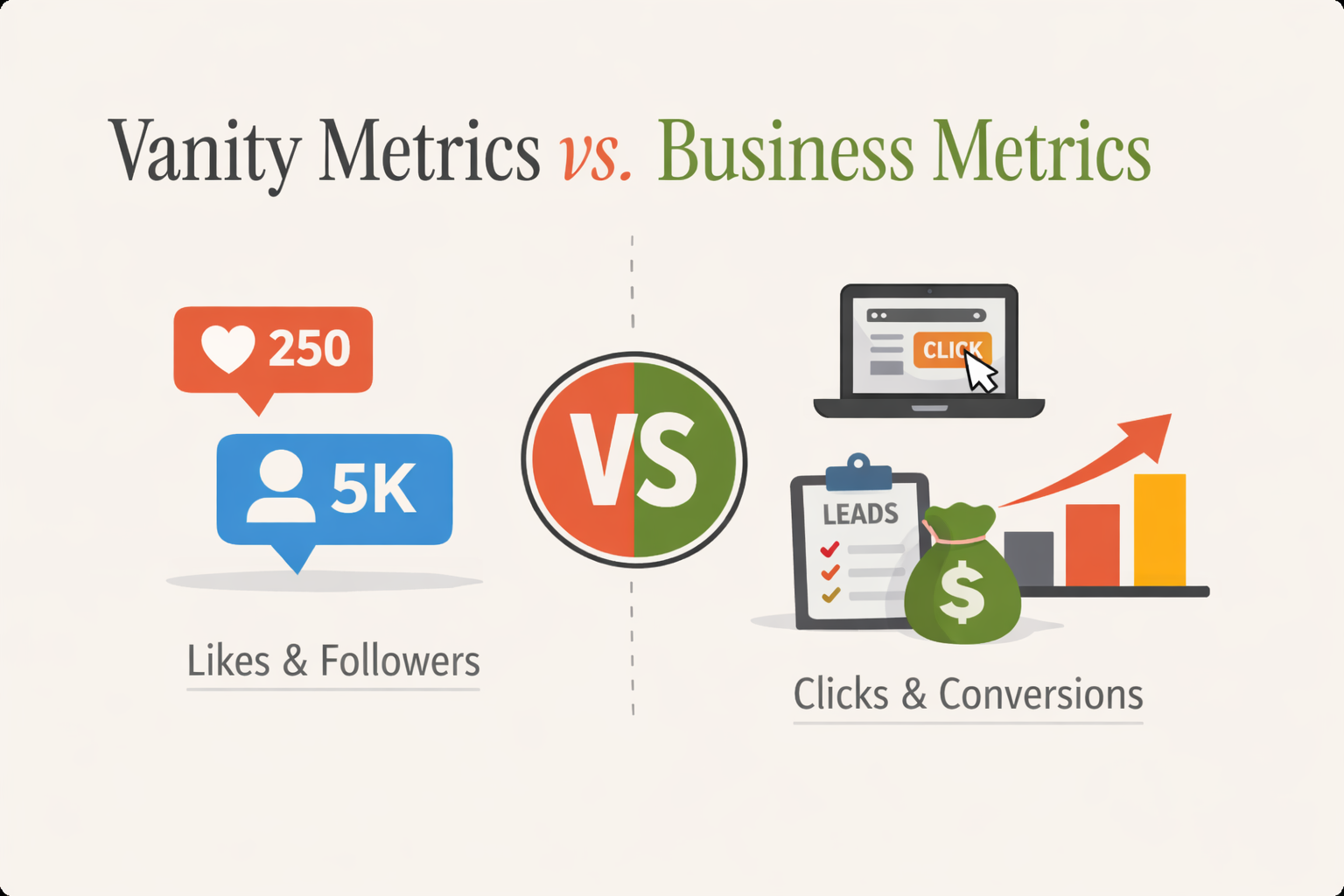
Vanity metrics vs. business metrics
At first, big numbers can look impressive. A post with many likes may seem successful. A sudden rise in followers may also look promising. However, these are often vanity metrics. They may support visibility, but they do not always show business value.
For potential clients, this difference matters. When you outsource social media management, you need more than surface-level results. You need to know if your content reaches the right people. You also need to know if it moves them closer to action. That is why business metrics matter more. Website clicks, inquiries, lead form submissions, and conversions show clearer value.
On their own, vanity metrics can mislead. A post may get many likes but no real traffic. In contrast, a post with fewer reactions may bring strong leads. That often happens when the message reaches the right audience. Therefore, a smart strategy should not focus only on what looks popular. Instead, it should track what supports awareness, trust, and growth.
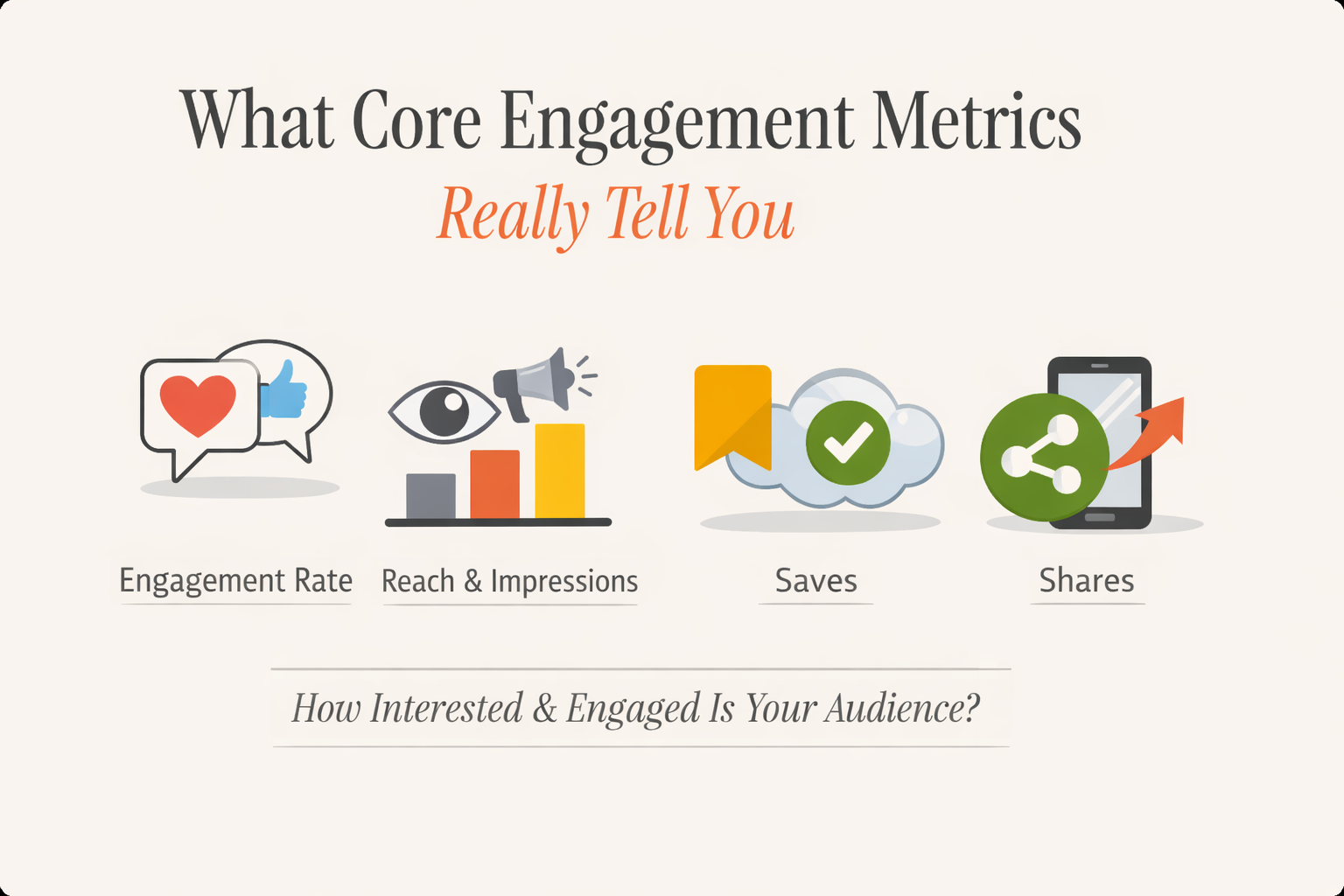
What core engagement metrics really tell you
Once goals are clear, the next step is to track the right performance indicators. Engagement rate, reach, impressions, saves, and shares all matter. Each metric tells a different story. Together, they show how content performs. They also show how people respond.
For example, engagement rate shows whether people interact with your content. This can tell you if a post feels useful or relevant. Reach shows how many unique users saw the post. Impressions show how many times it appeared on screens. As a result, these two metrics help you understand visibility.
Saves and shares can reveal even more. If someone saves a post, they likely want to return to it. If they share it, they think others may find it useful too. Therefore, these actions often signal strong content quality. They can also show real audience interest. For companies thinking about outsourced social media support, this matters a lot. The main question is simple: is the content only visible, or is it creating real interest?
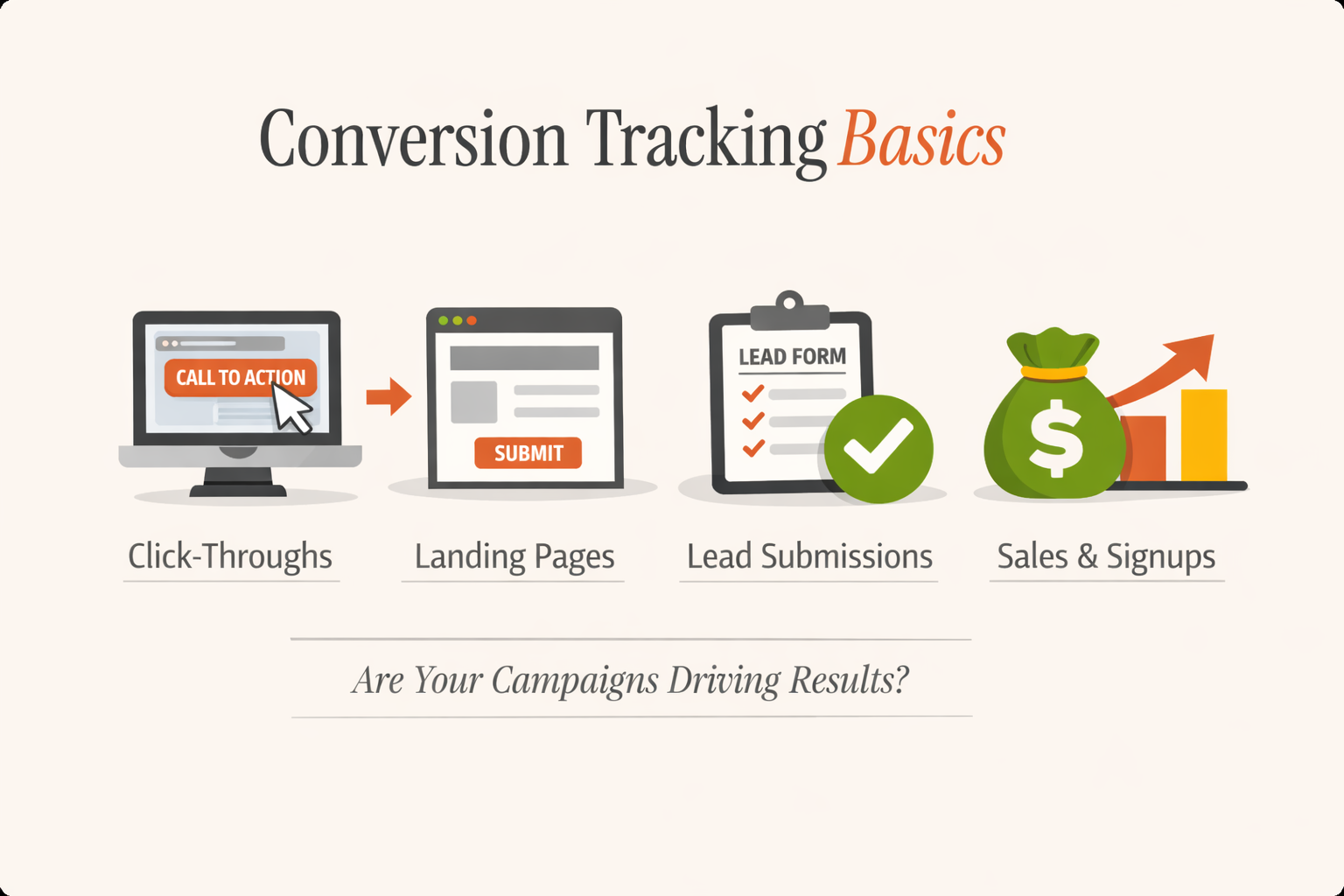
Conversion tracking basics
Engagement matters, but it is not the final goal. For most companies, social media should support real business outcomes. These may include website visits, form submissions, demo requests, or direct inquiries. Therefore, conversion tracking is an important part of social media performance tracking.
In simple terms, conversion tracking shows what happens after a click. Did someone visit a service page? Maybe they signed up for a newsletter. In some cases, they may have asked for a quote. These actions help businesses see whether social content supports the buyer journey. Without this step, return on investment is much harder to measure.
This is especially important when social media management is outsourced. You do not just want attention. You want progress. Content should support business goals and help move potential clients forward. Even basic tracking can give useful insight. Link clicks, landing page visits, and lead form completions reveal much more than likes alone. As a result, businesses can see what creates interest and what creates value.
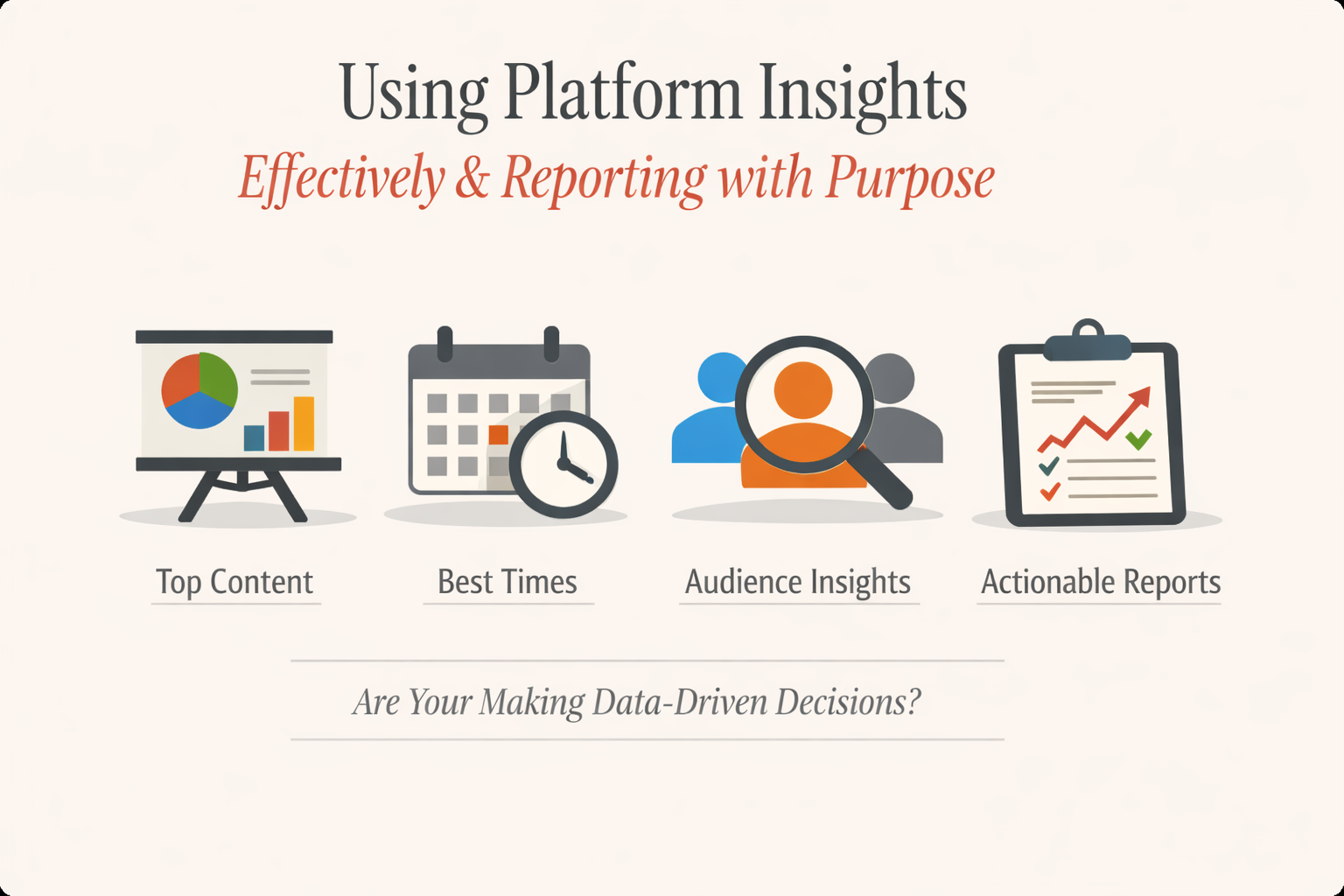
Using platform insights effectively and reporting with purpose
Most social media platforms already provide useful data. However, many businesses only look at it briefly. They check a few numbers, note a strong post, and move on. Yet platform insights can offer much more.
These tools can show which content formats perform best. They can also show when audiences are most active. In addition, they can reveal which topics get the strongest response. For example, one company may see better results from short educational posts. Another may get more traction from video. This kind of insight helps shape a better content plan.
A monthly report makes this data easier to use. It should include key metrics, top-performing posts, weaker content, and conversion results. It should also explain the next steps. For example, posting times may need to change. A certain topic may deserve more focus. Messaging may also need improvement. In other words, reporting should do more than describe results. It should help businesses make better decisions.
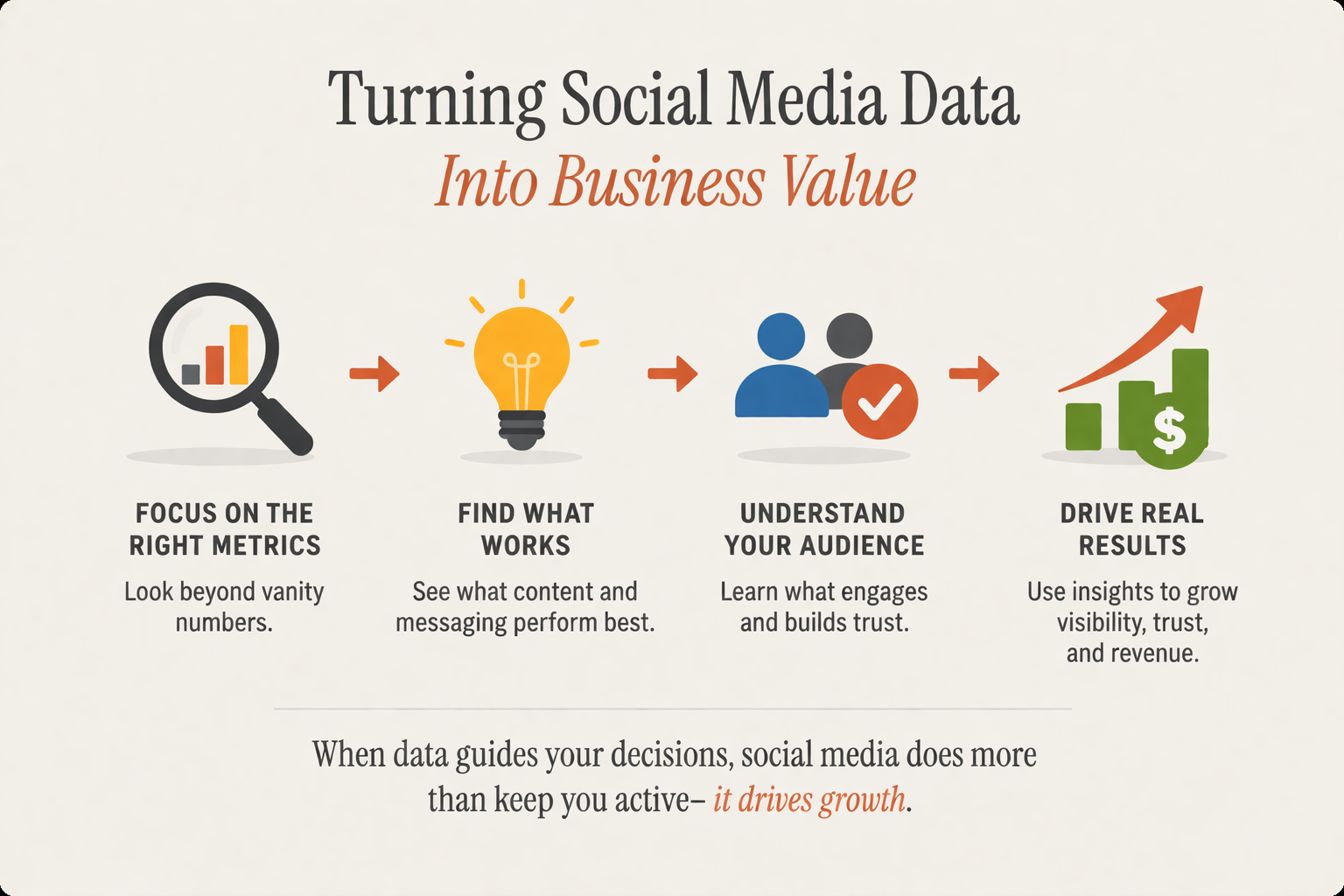
Turning social media data into business value
Social media data does not need to feel complicated. When businesses focus on the right social media metrics, the picture becomes clearer. First, they can separate vanity metrics from results that support growth. Then, they can see what content works, what engages the audience, and what drives action.
For companies looking for outsourced social media management, this clarity is very important. Regular posting is not enough. You also need insight, direction, and proof that your investment supports business goals. That is why reporting matters. It connects daily activity with bigger results.
Ultimately, the value of social media analytics lies in better decisions. When data leads to action, content improves over time. As a result, social media can do more than keep your brand active. It can support visibility, trust, and long-term growth.