Is your brand saying what you think it is?
Your brand might look good on paper, but does it connect in the real world? Uncover how you are truly perceived and get a clear path to a stronger, more unforgettable identity.
What's included in the 360° Audit?
A deep-dive diagnostic across every touchpoint
We don't just review your brand book. We analyze how your brand actually shows up in the wild, across every channel your customers touch. This is designed to find the hidden inconsistencies that are costing you trust and revenue.
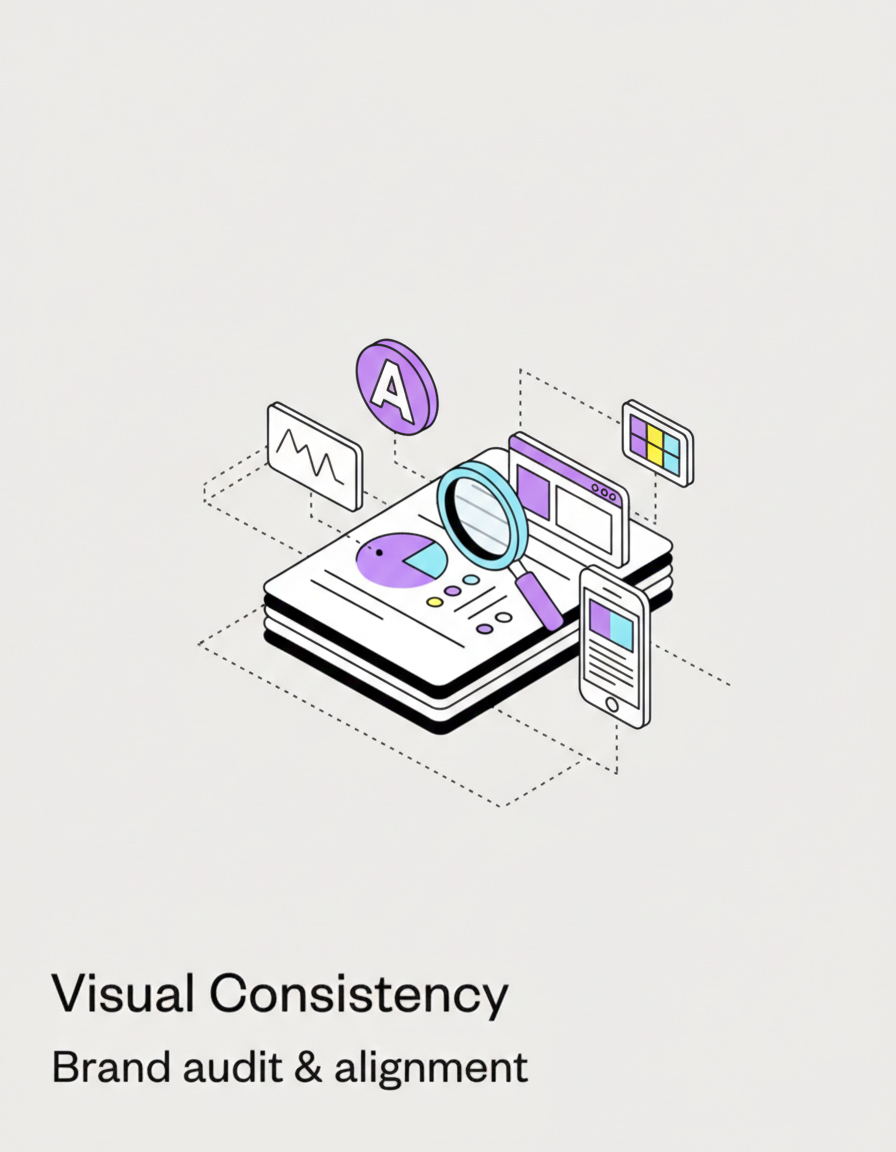
Visual Consistency
We assess logos, typography stacks, color palette usage, and imagery across your website, social, and sales decks to ensure professional alignment.
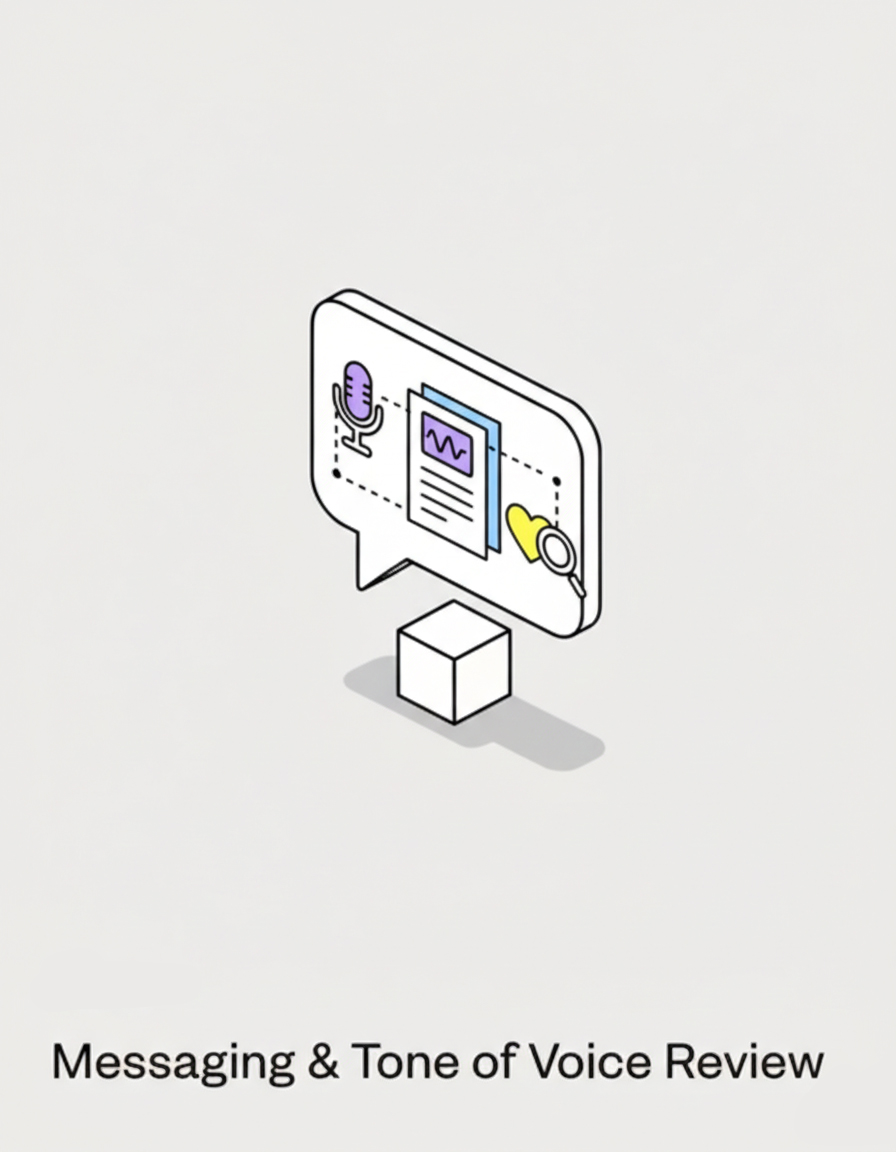
Messaging & Tone of Voice
Are your words helping or hurting? We review your marketing copy, headlines, and social posts for tone, clarity, and emotional resonance.
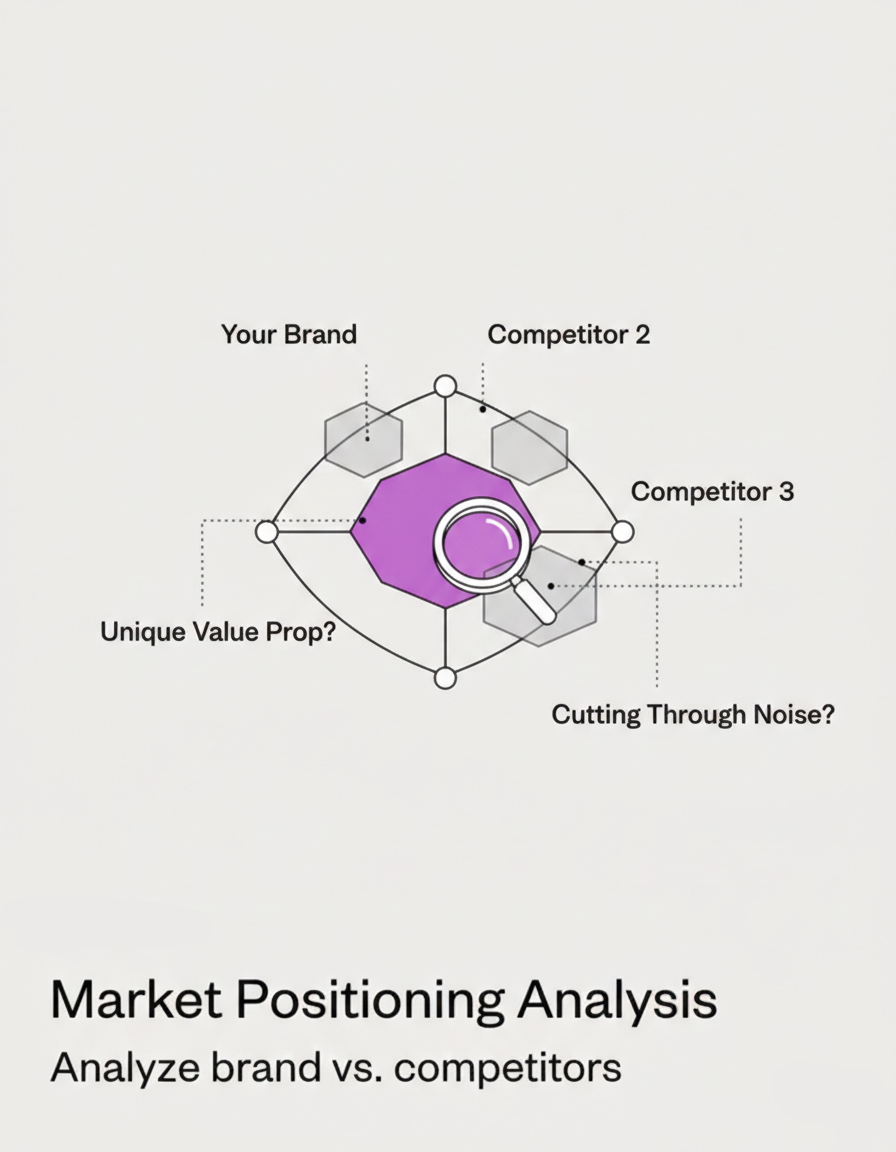
Market Positioning Analysis
We analyze how your brand stacks up against 3 key competitors and determine if your unique value proposition is cutting through the noise.
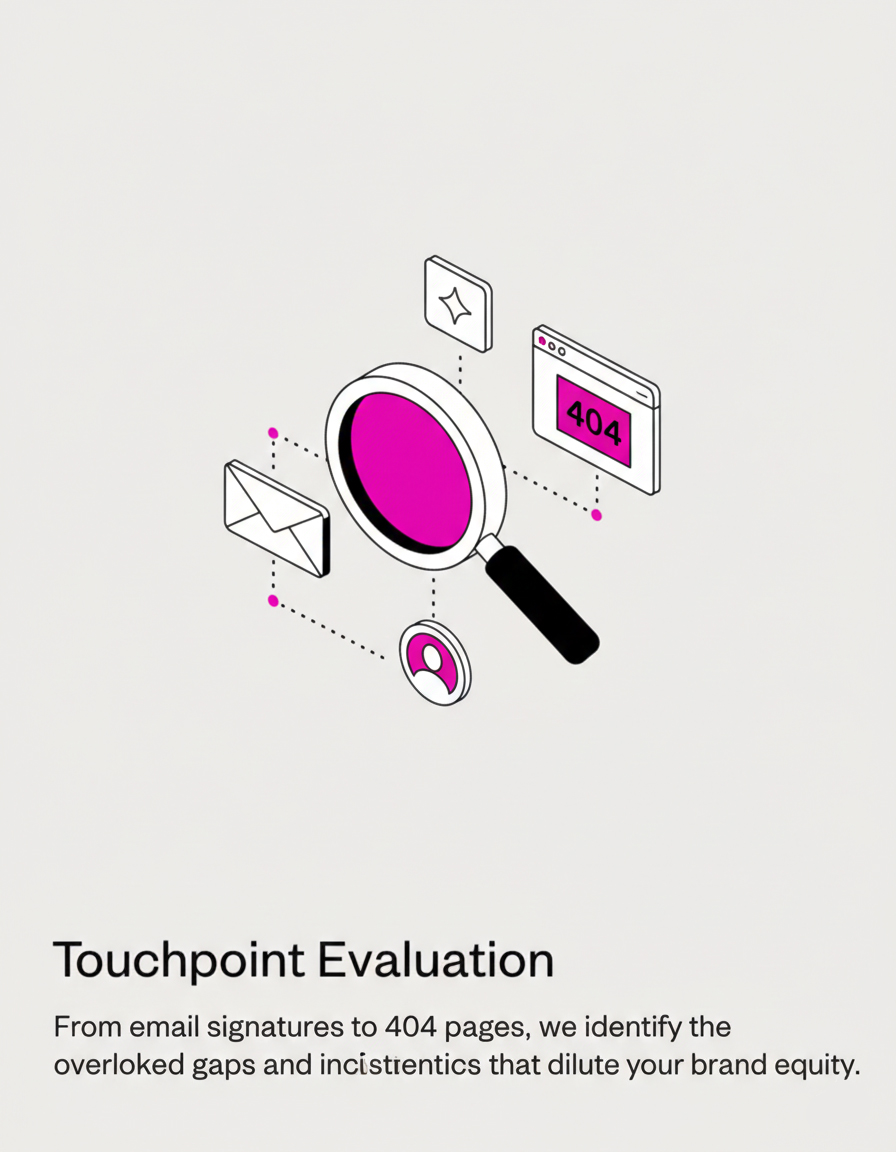
Touchpoint Evaluation
From email signatures to 404 pages, we identify the overlooked gaps and inconsistencies that dilute your brand equity.
What you'll get
We give you clear, actionable data — not just opinions. Here is the concrete output you can expect at the end of the engagement.
How the audit works
Our process is thorough yet efficient
Designed to require minimal effort from your team while delivering maximum insight.
Discovery & Intake
We start with a 30-minute kickoff call to understand your business goals and gather links to your key assets.
Deep-Dive Analysis
Our strategists spend 3-5 days reviewing every digital touchpoint against industry benchmarks for consistency.
Strategy Delivery
You receive the final report and scorecard, followed by a strategy session to map out your next moves.
The business impact
Why brand consistency matters financially
The data is clear: brand inconsistencies don't just confuse customers — they directly erode revenue, trust, and market position.
A consistent brand presentation has been shown to increase revenue by up to 23%. By identifying inconsistencies that erode trust, the audit helps improve conversion rates, makes marketing spend more efficient, and shortens sales cycles.
Consistent branding increases brand visibility by 3.5 times compared to brands with inconsistent presentation.
68% of consumers say brand consistency is important when deciding whether to trust a business.
Consistent brands are recognized 33% faster by consumers, reducing marketing friction and improving conversion.
90% of customers expect a consistent brand experience across all channels — failing to deliver costs you customers.
Understanding brand audits
Why inconsistency happens — and how we fix it
Most brand inconsistencies aren't the result of negligence. They emerge naturally as companies grow, teams expand, and marketing channels multiply. Here's what we've learned from conducting hundreds of brand audits.
The anatomy of brand drift
Brand drift happens gradually. It starts when a sales team creates their own pitch deck without consulting brand guidelines. It accelerates when regional offices adapt marketing materials to local tastes. It compounds when agencies interpret your brand differently across campaigns.
This isn't a failure of discipline — it's a structural challenge. As your organization scales, maintaining brand consistency requires systematic processes that most companies simply don't have in place. A brand audit identifies where these processes are missing and provides the roadmap to implement them.
What we actually look at
Our audit methodology examines your brand across four dimensions: visual identity (logos, typography, color, imagery), verbal identity (messaging, tone, voice, terminology), strategic positioning (differentiation, value proposition, competitive stance), and experiential touchpoints (how customers actually encounter your brand in the wild).
We don't just review your brand book. We analyze your website, social media profiles, LinkedIn company page, sales decks, email templates, product packaging (if applicable), customer support materials, job postings, and even your team's email signatures. We look at everything your customers see — because that's what shapes their perception.
The competitor benchmark
One of the most valuable components of the audit is the competitive analysis. We identify 3-5 of your key competitors and evaluate how your brand compares across the same dimensions. This reveals whether your visual identity is distinctive enough to stand out, whether your messaging is differentiated or generic, and whether your positioning is defensible or easily replicated.
Often, companies discover they're using the same stock imagery, similar color palettes, or nearly identical value propositions as their competitors. This isn't fatal — but it means you're competing on price and features rather than brand affinity, which is a harder, more expensive game to win.
Common patterns we see in audits
After conducting hundreds of brand audits, certain patterns emerge consistently. Logo inconsistency is almost universal — companies use outdated versions, incorrect colors, improper spacing, or unapproved variations across different channels. Typography chaos is nearly as common, with teams using 4-6 different font families when the brand guidelines specify 2.
What happens after the audit
The audit report isn't just a diagnosis — it's a prioritized action plan. We categorize findings into three tiers:
Fixes you can implement with minimal resources — standardizing logo usage, unifying color palettes, aligning core messaging.
Projects requiring moderate investment — updating sales materials, refining brand guidelines, redesigning key touchpoints.
Larger undertakings like brand refreshes, guideline overhauls, or complete visual identity updates.
Most clients see measurable improvement within 30 days by tackling the quick wins: standardizing logo usage, unifying color palettes across digital properties, aligning core messaging, and updating the most visible touchpoints. The medium-term and strategic recommendations become part of your marketing roadmap for the quarter or year ahead.
Who benefits most from a brand audit?
Companies experiencing rapid growth (your brand can't keep up with expansion), organizations preparing for major initiatives (fundraising, website redesign, rebrand, market entry), businesses feeling generic or overlooked (you blend in with competitors), and teams with internal disagreement about brand direction (sales and marketing aren't aligned). If any of these describe your situation, an audit provides the clarity and consensus you need to move forward confidently.